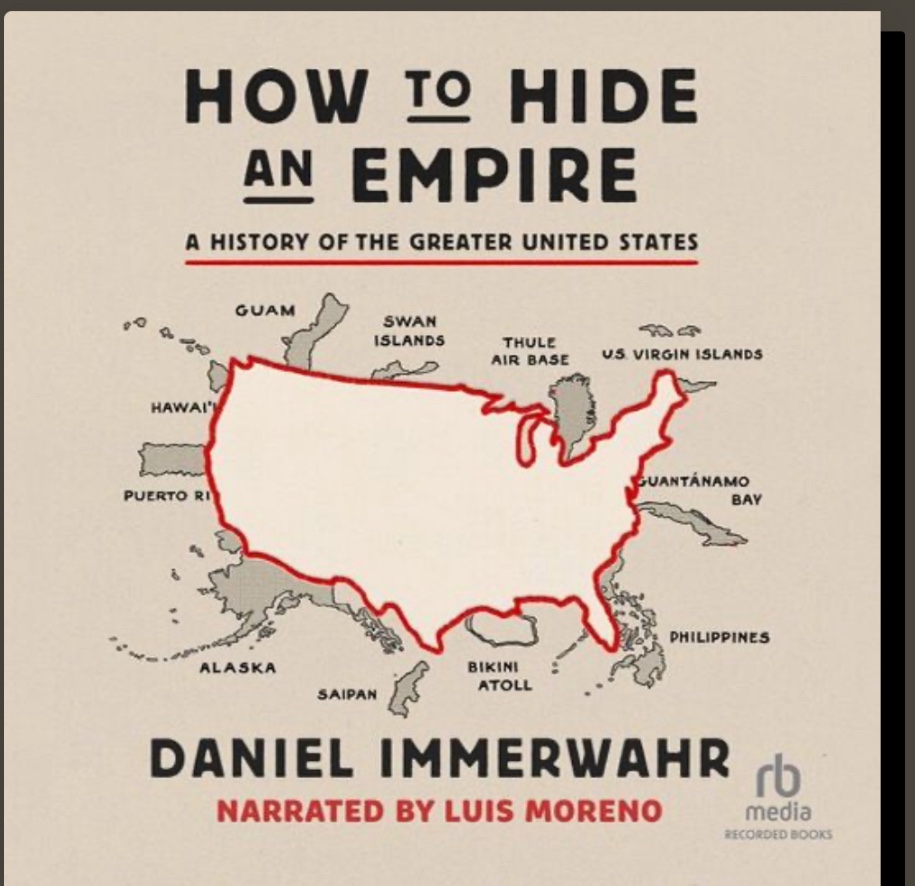
This is a history book written for a general audience and it is about the United States and its territories. It explores why we have expanded, when we have expanded, how we’ve viewed territories, and the consequences of the views for both the people in the territories and the people at home.
I learned a lot reading this. I was aware that the U.S. still holds territories and that it has held more and different territories in the past, but hearing about how different territories have been treated and its connection to things like race and immigration rules was eye-opening. Thinking about things like citizenship has consequences for things like voting in national elections, so even if we don’t currently hold the all the territories we’ve historical held, this part of our history is still important because it does still impact us today. (If you’ll recall from the previous Presidential election where some of our citizenry were surprised to find that Puerto Ricans are U.S. citizens, but they can only vote in the presidential election if they live on the mainland.)
So, this was good and I would recommend it. I also recommend getting it as an audiobook. Luis Moreno’s narration is engaging and it carried me through places where dates and details may have stopped me if I had been reading if off a page.



 Today is the last day of February and as such the last day of our group read of John Lewis’ March. Were you able to finish all three volumes of March? What are your final observations? What will you take away from John Lewis’ story? I was really moved by his story but it also illustrated my own privilege. There are many small things that I have taken for granted. Obviously, I was raised in a different time and place but I’ve never had to worry about where I had to sit on a bus or be concerned about what truck stops to stops at when traveling with my family. My life would never be threatened because I wanted to register vote. Even now,. as more and more states tighten of voting laws, I don’t feel that my constitutional rights will be threatened but I do worry for minorities and marginalized groups having their rights stripped away. We have not come as far as we think we have. Old prejudice are hard die and I worry about how much farther we will fall back. It’s also makes me think about what I’m willing to go to jail for or willing to be beaten for. I’m not really sure. This year, I’ve already participated in my first protest march and have called my Congress representatives more then I have ever in the past. I’m not sure I have the bravery of John Lewis and Fannie Lou Hamer, Rosa Parks and so many others. I seriously hope that it won’t come to that. That we will be able to keep our protest peaceful and those we opposed will to as well. The importance of this book is so we don’t forget the mistakes of our past. To remind all of us about our history so we are not doomed to repeat it. Knowledge is truly power.
 2 Women, So Many Books