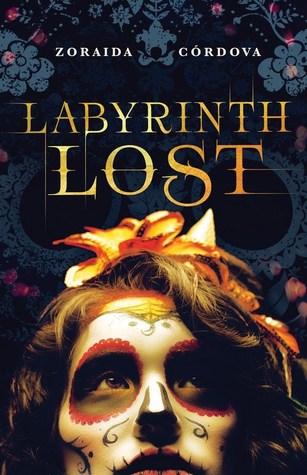
Rick Riordan has made a career of making Greek, Roman, Norse and Egyptian mythology more accessible to kids and adults. Now he is launching his own imprint to bring a more diverse set of mythology written by authors of that culture. The covers for the first three books released under his imprints are amazing. If I wasn’t excited about reading them before, I am now. Take a look.
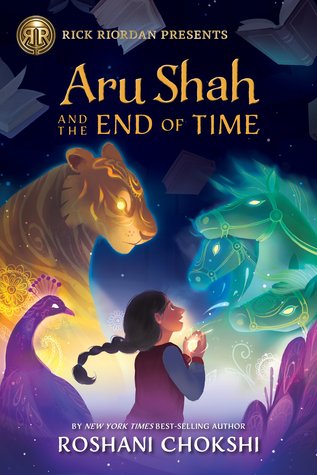 Aru Shah and the End of Time by Roshani Chokshi.
Twelve-year-old Aru Shah has a tendency to stretch the truth in order to fit in at school. While her classmates are jetting off to family vacations in exotic locales, she’ll be spending her autumn break at home, in the Museum of Ancient Indian Art and Culture, waiting for her mom to return from their latest archeological trip. Is it any wonder that Aru makes up stories about being royalty, traveling to Paris, and having a chauffeur?
One day, three schoolmates show up at Aru’s doorstep to catch her in a lie. They don’t believe her claim that the museum’s Lamp of Bharata is cursed, and they dare Aru to prove it. Just a quick light, Aru thinks. Then she can get herself out of this mess and never ever fib again.
But lighting the lamp has dire consequences. She unwittingly frees the Sleeper, an ancient demon whose duty it is to awaken the God of Destruction. Her classmates and beloved mother are frozen in time, and it’s up to Aru to save them.
The only way to stop the demon is to find the reincarnations of the five legendary Pandava brothers, protagonists of the Hindu epic poem, the Mahabharata, and journey through the Kingdom of Death. But how is one girl in Spider-Man pajamas supposed to do all that?
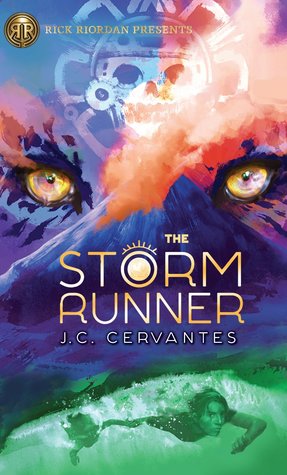 The Storm Runner by J.C. Cervantes
A 13-year-old boy must save the world by unraveling an ancient Mayan prophecy
Zane must not only grapple with a family history that connects him to the Mayan gods, but with newly acquired knowledge that his ancestry may have something to do with a leg deformity that requires he use a cane — not the greatest reality for a middle schooler.
Feisty heroes, tricky gods, murderous demons, and spirited giants are just some of the pleasures that await in this fresh and funny take on Mayan mythology, as rich and delicious as a mug of authentic hot chocolate
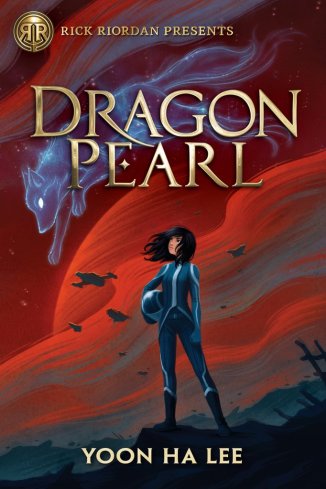 Dragon Pearl by Yoon Ha Lee
Space opera based on Korean mythology.
A standalone middle grade novel starring Min, a teenage fox spirit whose brother is missing and thought to have deserted the Thousand Worlds Space Forces in order to find the pearl of the title, an artifact that may have the power to save their struggling space colony.


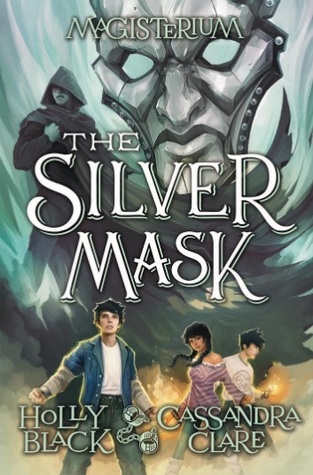 So what do you do when you have the soul of the enemy of death even though you have no memory of his past life and now everyone else knows it and blames you for the death of your best friend but your innocent? For Call it means you get thrown in jail, broken out and then kidnapped by the very people who’ve been trying to avoid the last three years. Call’s luck is almost none existent. Call is also full of self doubt and guilt. He wasn’t the one to kill Aaron, that was Alex but he still feels responsible for it. If Tamara had chosen to save Aaron instead of Call it would have been Call who died and not Aaron. Does Tamara regret that choice? Call had always assume that Tamara liked Aaron more than him and like most people tolerated him because Aaron did. Now that Tamara, Jasper and Call are kidnapped by Master Joseph and his crew things get a little hazy. Call is not Constantine despite having his soul but he’s been having trouble convincing others of this. He may not be him but that doesn’t mean he doesn’t share some of his ambitions. Without Aaron, Call feels a little lost and maybe all would be forgiven and go back to what they were if Aaron was alive again. Master Joseph gives him the chance. Raise Aaron back from the dead and you can decide whether you want to stay or not. The Enemy of Death was called that because his obsession with defeating death. I’m not sure I buy that if Call is able to bring Aaron back that all would be forgiven and that all of a sudden there would be so much support for his cause but we need to find the conflict. Of course Call is able to bring back Aaron by doing the one thing that Constantine was never willing to do, give apart of himself to do so but you can never go back. Aaron is not as he was because he was dead and should be dead. Call’s plan to bring Aaron back and things go back the way they were goes sideways immediately and battle ensues. If I didn’t know that there is one more book left in the series, I would almost think that this was finale because there was a lot of loose ends tied up. I’m not sure where they go from here but there is still one bad guy still out there.
 The Hate U Give may be categorized as a fiction novel but make no mistake, there is nothing fictional about it. Yes, Starr, Khalil, Seven, Maya, Devante, Big Mav, Lisa and Kenya don’t actually exist but their story does. Starr is a sixteen year old girl who lives in the hood but goes to school in private school in the suburbs. Her worlds could not be different. Over Spring Break, her best friend Khalil gets shot and killed by a police office during a routine traffic stop and Starr is the only witness. Starr must reconcile her own feelings about what she witnessed and the realities that come with it while also coming to grips how it effects her two different worlds. It gets thrown into sharp relief how her family and neighbors think what happens versus what her friends at school do. Starr grapples with her own fears and find her own voice to stand up for what rights, stand up to the authorities and her own friends too. This book is heartbreaking because it’s a story that we have seen played out too many times in the last couple of years. Khalil was unarmed when he was killed. Yes, he did sell drugs and had involvement with gangs but none of those facts should be justification for what this officer did. You could replace Khalil’s name with Michael, Philandro, Tamir, Tayvon or any other young black men unjustly killed by law enforcement and you would go through the same emotions. Angie Thomas does a brilliant job of outlining all the many view points about this issue. From Starr’s father, a former gang member and ex-con who is far to aware of how the justice system works to Hailey, Starr’s rich white friend who is willing to protest only because it got her out of class for a day. As the reader, we see what happened and how it happened at the beginning of the book. We know it was unjust but since the other characters weren’t there, we get to see how they process it through how they relate to Starr. They accept or deny it depends mostly on their own socioeconomic background and yes race plays apart of it too. Starr’s family of course understand immediately that Khalil did nothing wrong and that Starr did nothing wrong. They also know that because of the neighborhood that they live in it could be dangerous for Starr to speak out even if can help bring him justice. Whatever her decision, they always have her back. The first thing that really struck me was when Starr and Khalil were pulled over, Starr goes over in her head how she is supposed to act when interacting with cops. She says when she was 12 her father told her to do as the officer says, don’t talk unless spoken to and keep your hands visible. She was told this at twelve. Meaning that her parents thought, even as young as twelve years old she could be in danger. I tried to think if my parents and I ever had a talk about what to do if I got pulled over and I don’t think we ever did. Why would we? We are white, there is no reason for cops to look at me or my sister and assume we were up to no good. That we were criminals. That we could be dangerous but Starr’s parents and many black parents have to worry about that for their kids. That is truly heartbreaking. Two of the most interesting characters, okay maybe not the most interesting are Chris and Hailey. Chris and Hailey are both white, privileged and rich. Chris is Starr’s boyfriend. They share a love for sneakers, basketball and Fresh Prince of Bel Air. He at times is completely oblivious to their differences. He doesn’t notice or bother him that people stare at them when they walk down the hallway. He wouldn’t say he was racists and most people would agree with him but because of his own privilege, without even realizing it he sometimes falls into the insensitive thinking. He doesn’t understand why Starr is so upset with him or just in general but when she tells him he does try to understand. He wants to be supportive to Starr and that means challenging his own misconceptions and that’s what makes a good ally. Hailey also wouldn’t call herself a racist either. She would be one of those people who says, “I’m not a racists have a black and Asian friend.” Throughout the book she makes insensitive comments and try to pass them off as jokes. When she gets called out on she gets defensive. “It was a joke” “I didn’t mean anything by it” “I can’t believe you would think I’m a racist” Even demands for Starr to apologize to her. She makes absolutely no effort to see Starr’s point of view or acknowledge that what she said hurt her feelings. When she does apologize, it isn’t because she sees what she did or said was wrong it’s that she wants things to go back to what they were before. Since I assume there are going to be a lot of young white readers of this book, Chris and Hailey are important because they may not be able to relate with Starr and her family but they probably can relate to either Chris or Hailey, whether they want to admit it or not. I hope they take a hard and close look at both of those characters and ask themselves some uncomfortable questions. Are they more like Chris or like Hailey? This novel really should be required school reading. Not just because it was well written but also because it does outline all the point of views and how much it should be it’s not just black and white but shades of gray. Only be listening and understanding what people of color and marginalized communities are saying and owning up to our prejudices will we able to end this. So one day, we won’t have to teach our children how to act in police presence and police won’t make snap judgments about civilians based on skin color.