Assigned Reading: Frankenstein by Mary Shelley and The Importance of Being Earnest by Oscar Wilde

Very occasionally, the interests of my work life and this blog align. This past year, it feels like that has happened more than any other time in career. I’ve been teaching some new-to-me courses in a different department than my home department, teaching some required general education Humanities courses. This has been delightful. I’ve gotten to interact with many students I would have never had the chance to interact with. And I’ve gotten to read (re-read) some classics, some foundational texts, and some big-named thinkers. The Humanities are important because we are important, to ourselves and to each other. These courses I have been teaching allow students to practice important skills around critical thinking and effective communication, but they also give them space to really consider big concepts that loom in the background of our days and define them for themselves. It seems silly to ask, in part because it is so ubiquitous, but what actually is ‘modernity’? Or, ‘progress’? How about ‘what does it mean to be American?’ But the answers to these questions can have very real world consequences. Definitions of modernity can classify useful and important things as out-dated and old-fashioned. For example, do students need writing skills or do they just need to know how to use AI templates? Definitions of progress can have huge impacts on what we require of students, what we expect from companies, what our government’s policy goals are. When we decide what counts as progress, we decide what our priorities are. For example, is generative AI progress? And for the impacts of what it means to be American, you can look at the headlines. The courts are debating who actually falls under birthright citizenship right now.

A man looks at his reflection in a pond. Text reads "Mary Shelley" "Frankenstein: the 1818 text"
Frankenstein by Mary Shelley

Two times this Spring, I had the opportunity to revisit classic works in the course of my teaching.The first is Frankenstein by Mary Shelley. I dug this out of the back of my bookshelves from when I was an undergraduate. This classic novel is a seminal work in sci-fi and horror and tells the story of Dr. Frankenstein, a man who never once stops to ask himself if he should, just because he can. I have discovered teaching this book (and from interactions that I’ve had with people on fable), that if your only reference to Frankenstein is pop culture, that you might be expecting this to be centered around the monster. And, it is, except the monster isn’t the creature. Dr. Frankenstein does this massively unethical breakthrough science and then fails, repeatedly, to take responsibility for the consequences of his work. Even though this was first published in 1818, it still feels very relevant to me. A perennial topic for opinion pieces (and for my student’s writing this past year) has been the cultural divide we are seeing and the idea that many of us are living in an echo chamber or are siloed off from ‘the rest of the world’. Dr. Frankenstein lives in this bubble where he thinks about his ideas and how to apply them and then doesn’t step back to seriously consider the implications of those applications. This is a theme that my students have been picking up on and that really resonates with them. It’s like voting for a politician because you like one idea that politician discusses without considering what that would actually mean for their own lives.
Man looks at the viewer with a jacket draped over his shoulder while facing right on a orange background. The text reads "The Importance of being Earnest. Oscar Wilde"
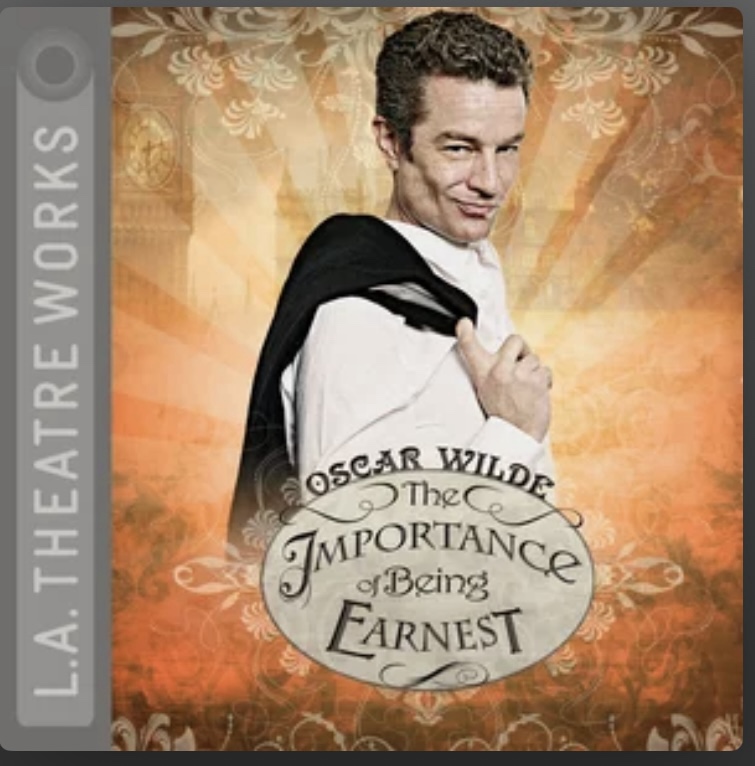
The Importance of Being Earnest by Oscar Wilde

The second overlap was The Importance of Being Earnest by Oscar Wilde. I listened to the L.A. Theatre Works production that I got from my local library.This is such a fun play as Wilde pokes fun at Victorian sensibilities and their obsession with appearance by punning off the word “Earnest”. In the play, two men discover that they are both playing similar games. They have a secret alter ego that they are always in need of rescuing that allows them to escape from the seriousness of their lives. This backfires a bit they fall in love with women who are both smitten with ‘Earnest’, one of the secret alter egos. This play is so silly and so fun, but it also something that my students have really enjoyed digging into. As largely members of Gen Z, they have grown up with the internet and very aware of what its like to live in a time that is utterly obsessed with appearance. For them, it might be how they express themselves on social media, but they still are able to draw parallels with the Wilde text.

It is a delight to be able to discuss reading with people who don’t always identify as readers themselves. Beth and I are obviously into reading for fun, but not everyone is, so their perspectives on classics are informed by other things beyond the written word. And it is always interesting to hear what people have to say about the connections they make between classics and their lives. It is also so important to connect with people and to think about big ideas. When we get caught up in the details of our lives (bills, health, jobs, family, etc.), we don’t always leave ourselves time to think about things and enjoy ourselves. But we should, because our humanity is important.

Weekend Reads: Cottage Core Vibes

Welcome to April! I can’t believe it is already April. Time waits for no man, eh? It’s a new month and the end of the week, so I’m back with another weekend reads that has suggestions for this month’s TBR Project Book Club on Fable. The TBR project is our book club with a twist: everyone reads their own selection! The catch is that it has to be something off your TBR. Every month, we pick a theme, you pick a book, and we cheer each other on and discuss our picks (no spoilers) on Fable.

After last month’s theme of Stories that were meant to stay fiction a.k.a. it was a story, not a suggestion, we thought this month we’d shoot for something lighter. I was thinking something Springy, maybe something pastoral and Beth suggested Cottage Core. The idea here is to pick something that is home-centered, chill, maybe a little bucolic, maybe a little slice-of-life. This is a good theme for that classic you’ve always wanted to get to but never had or that one romance novel you’ve been saving for just the right time. If you needed a sign, this is it! So, without further ado, here are four picks for you to consider.

Wuthering Heights by Emily Brontë

An all-time fave here at Stacks, Beth and I have both read this multiple times. It follows the adventures of Heathcliffe as he meets a girl, loves a girl, loses a girl, and then proceeds to mess up both his life and hers! It is terrible people doing horrible things to each other and I know that doesn’t sound like a recommendation, but it is. If you like messy people, reality TV, and gossip columns and you haven’t read this yet, this is a classic for you.

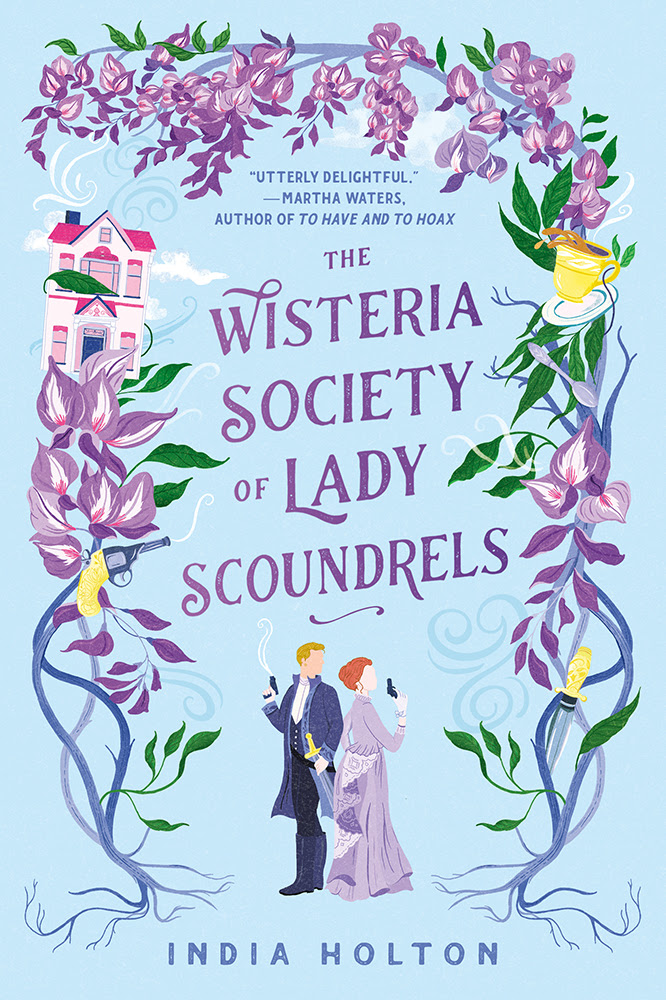
The Wisteria Society of Lady Scoundrels by India Holton

This one has already made an appearance in weekend reads, but I’d be remiss in not mentioning it because it is my pick for this month! Beth read it an age ago and lent me her copy, and it is time I read it, too. I’m promised adventures, romance, hijinks, flying houses, and piracy. It is not necessarily the pastoral notion I first envisioned, but from the cover it seems like it’ll fit the bill. (And, yes, I know you shouldn’t judge a book by its cover but… I’m also judging it by Beth’s recommendation. So, I think I’m all good.)

The Hacienda by Isabel Cañas

If you’re feeling the pastoral, country vibes of the theme, but you’re not excited for something soft and romantic, then I’d like to recommend some gothic horror to you. Set in the time after Mexico’s war for Independence, Beatriz moves to the countryside to her new husband’s pulque-producing estate. She has big plans about being the lady of the house and making her mark, but house itself has some other ideas. Interesting characters, good atmosphere, chilling and creepy moments. This is a fun one.

Get a life, Chloe Brown by Talia Hibbert

Last but absolutely not least, if you’re feeling the slice-of-life, soft home vibes, but you aren’t feeling the country aspects of the theme, try Get a Life, Chloe Brown by Talia Hibbert. Part of the Brown sisters series, this installment follows eldest sister Chloe Brown as she decides to get a life. Chloe is thoughtful, hardworking, and serious and so she makes herself a to-do list of life-getting goals. This book was so cute. Chloe is wonderful and relatable. Red is also great. Chloe’s family are a hoot. I absolutely love this series and I think you will, too.

So, there you go. Some recs to start your weekend off right. Let us know what your favorite books with cottage core vibes are in the comments!

Review: The Hacienda by Isabel Cañas

The Hacienda by Isabel Cañas is a gothic horror delight. Set in the time after the Mexican war for independence, we follow Beatriz as she moves into in her new husband’s pulque-producing hacienda. She is the second wife of the Rodolfo, who’s previous wife died under mysterious circumstances. Everyone seems to have a different story about how his first wife died. The war was hard on Beatriz and her family, but she sees this marriage as a way to change her and her family’s fortunes. It also follows Andres, a local priest who was raised on the Hacienda but for unknown reasons has been banished. Beatriz finds the house to be fine, if neglected at first, but increasingly sinister as the novel progresses. She finds Rodolfo’s sister, an unexpected addition to the property, to be unsettling at best and actively working to undermine her at worst. She must call on the help of Andres and solve the mystery of the house before she becomes another one of its victims.

I enjoyed the setting of this immensely. I know a little bit about Mexico’s history and I loved the idea and the execution of a story with the foreboding home, mysterious husband, a first wife, etc. set in this period of post-war turmoil. This is set in a period of Mexican history where there were a lot of different factions and uncertainties, which was perfect for setting up the characters. It gave the typical elements of gothic horror another layer where we were also looking at the horrors of colonialism. Cañas is a Mexican-American author and says in an author’s note that she picked this time period and wrote these characters in part to fill a gap that she had found in this genre. She had never read stories about women like her. In that same author’s note, she also recommends history readings, in case you are further interested in the time period. I very much appreciate that.

This was really good and if you like gothic horror/romance elements, then I recommend this! Another great find at my local library!