Assigned Reading: Frankenstein by Mary Shelley and The Importance of Being Earnest by Oscar Wilde

Very occasionally, the interests of my work life and this blog align. This past year, it feels like that has happened more than any other time in career. I’ve been teaching some new-to-me courses in a different department than my home department, teaching some required general education Humanities courses. This has been delightful. I’ve gotten to interact with many students I would have never had the chance to interact with. And I’ve gotten to read (re-read) some classics, some foundational texts, and some big-named thinkers. The Humanities are important because we are important, to ourselves and to each other. These courses I have been teaching allow students to practice important skills around critical thinking and effective communication, but they also give them space to really consider big concepts that loom in the background of our days and define them for themselves. It seems silly to ask, in part because it is so ubiquitous, but what actually is ‘modernity’? Or, ‘progress’? How about ‘what does it mean to be American?’ But the answers to these questions can have very real world consequences. Definitions of modernity can classify useful and important things as out-dated and old-fashioned. For example, do students need writing skills or do they just need to know how to use AI templates? Definitions of progress can have huge impacts on what we require of students, what we expect from companies, what our government’s policy goals are. When we decide what counts as progress, we decide what our priorities are. For example, is generative AI progress? And for the impacts of what it means to be American, you can look at the headlines. The courts are debating who actually falls under birthright citizenship right now.

A man looks at his reflection in a pond. Text reads "Mary Shelley" "Frankenstein: the 1818 text"
Frankenstein by Mary Shelley

Two times this Spring, I had the opportunity to revisit classic works in the course of my teaching.The first is Frankenstein by Mary Shelley. I dug this out of the back of my bookshelves from when I was an undergraduate. This classic novel is a seminal work in sci-fi and horror and tells the story of Dr. Frankenstein, a man who never once stops to ask himself if he should, just because he can. I have discovered teaching this book (and from interactions that I’ve had with people on fable), that if your only reference to Frankenstein is pop culture, that you might be expecting this to be centered around the monster. And, it is, except the monster isn’t the creature. Dr. Frankenstein does this massively unethical breakthrough science and then fails, repeatedly, to take responsibility for the consequences of his work. Even though this was first published in 1818, it still feels very relevant to me. A perennial topic for opinion pieces (and for my student’s writing this past year) has been the cultural divide we are seeing and the idea that many of us are living in an echo chamber or are siloed off from ‘the rest of the world’. Dr. Frankenstein lives in this bubble where he thinks about his ideas and how to apply them and then doesn’t step back to seriously consider the implications of those applications. This is a theme that my students have been picking up on and that really resonates with them. It’s like voting for a politician because you like one idea that politician discusses without considering what that would actually mean for their own lives.
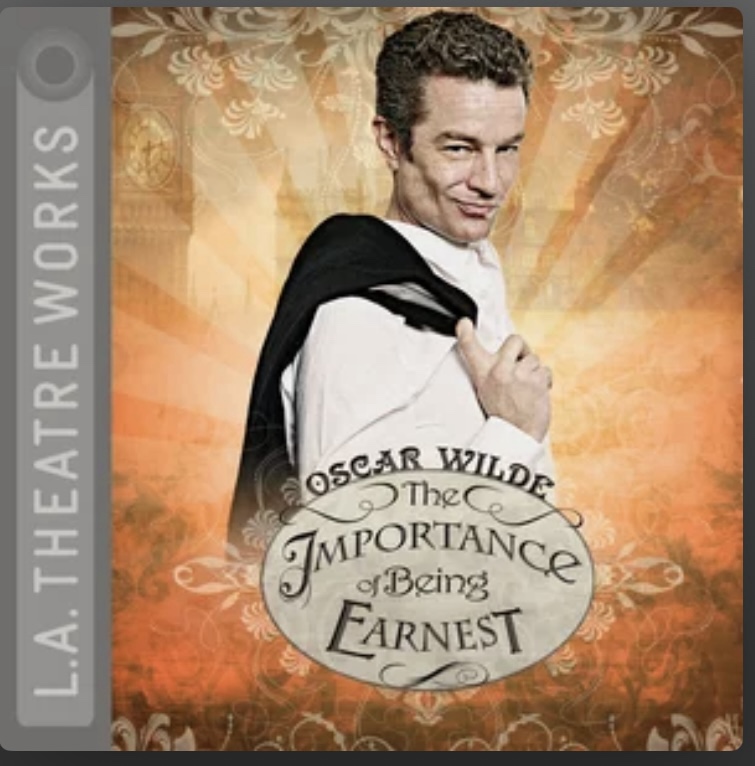
Man looks at the viewer with a jacket draped over his shoulder while facing right on a orange background. The text reads "The Importance of being Earnest. Oscar Wilde"
The Importance of Being Earnest by Oscar Wilde

The second overlap was The Importance of Being Earnest by Oscar Wilde. I listened to the L.A. Theatre Works production that I got from my local library.This is such a fun play as Wilde pokes fun at Victorian sensibilities and their obsession with appearance by punning off the word “Earnest”. In the play, two men discover that they are both playing similar games. They have a secret alter ego that they are always in need of rescuing that allows them to escape from the seriousness of their lives. This backfires a bit they fall in love with women who are both smitten with ‘Earnest’, one of the secret alter egos. This play is so silly and so fun, but it also something that my students have really enjoyed digging into. As largely members of Gen Z, they have grown up with the internet and very aware of what its like to live in a time that is utterly obsessed with appearance. For them, it might be how they express themselves on social media, but they still are able to draw parallels with the Wilde text.

It is a delight to be able to discuss reading with people who don’t always identify as readers themselves. Beth and I are obviously into reading for fun, but not everyone is, so their perspectives on classics are informed by other things beyond the written word. And it is always interesting to hear what people have to say about the connections they make between classics and their lives. It is also so important to connect with people and to think about big ideas. When we get caught up in the details of our lives (bills, health, jobs, family, etc.), we don’t always leave ourselves time to think about things and enjoy ourselves. But we should, because our humanity is important.
Weekend Reads: Cottage Core Vibes

Welcome to April! I can’t believe it is already April. Time waits for no man, eh? It’s a new month and the end of the week, so I’m back with another weekend reads that has suggestions for this month’s TBR Project Book Club on Fable. The TBR project is our book club with a twist: everyone reads their own selection! The catch is that it has to be something off your TBR. Every month, we pick a theme, you pick a book, and we cheer each other on and discuss our picks (no spoilers) on Fable.

After last month’s theme of Stories that were meant to stay fiction a.k.a. it was a story, not a suggestion, we thought this month we’d shoot for something lighter. I was thinking something Springy, maybe something pastoral and Beth suggested Cottage Core. The idea here is to pick something that is home-centered, chill, maybe a little bucolic, maybe a little slice-of-life. This is a good theme for that classic you’ve always wanted to get to but never had or that one romance novel you’ve been saving for just the right time. If you needed a sign, this is it! So, without further ado, here are four picks for you to consider.

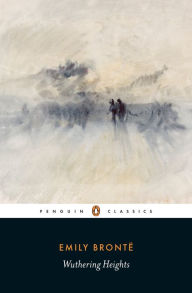
Wuthering Heights by Emily Brontë

An all-time fave here at Stacks, Beth and I have both read this multiple times. It follows the adventures of Heathcliffe as he meets a girl, loves a girl, loses a girl, and then proceeds to mess up both his life and hers! It is terrible people doing horrible things to each other and I know that doesn’t sound like a recommendation, but it is. If you like messy people, reality TV, and gossip columns and you haven’t read this yet, this is a classic for you.

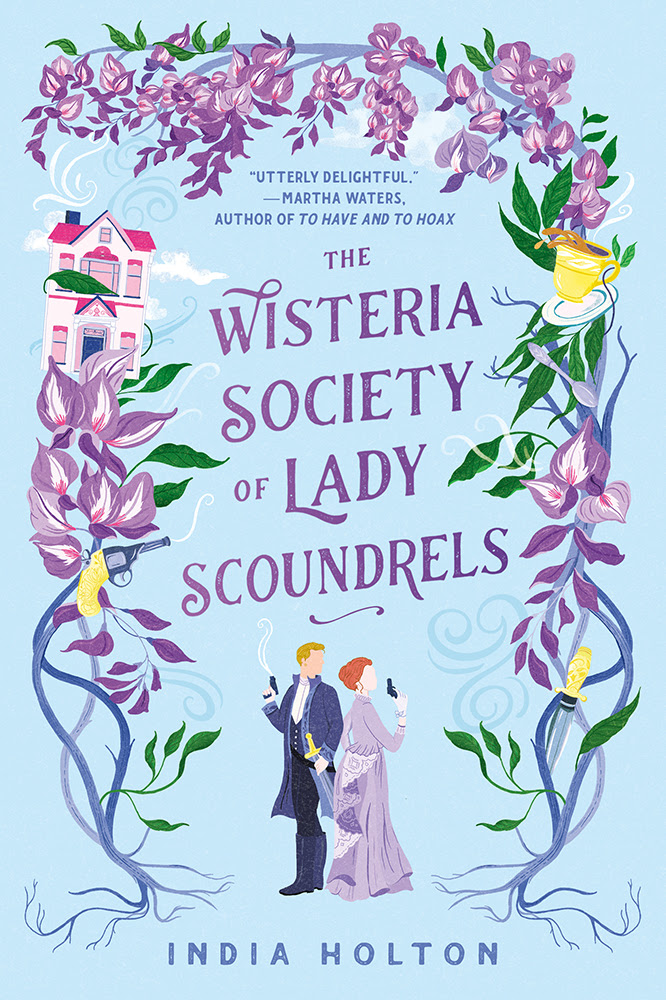
The Wisteria Society of Lady Scoundrels by India Holton

This one has already made an appearance in weekend reads, but I’d be remiss in not mentioning it because it is my pick for this month! Beth read it an age ago and lent me her copy, and it is time I read it, too. I’m promised adventures, romance, hijinks, flying houses, and piracy. It is not necessarily the pastoral notion I first envisioned, but from the cover it seems like it’ll fit the bill. (And, yes, I know you shouldn’t judge a book by its cover but… I’m also judging it by Beth’s recommendation. So, I think I’m all good.)

The Hacienda by Isabel Cañas

If you’re feeling the pastoral, country vibes of the theme, but you’re not excited for something soft and romantic, then I’d like to recommend some gothic horror to you. Set in the time after Mexico’s war for Independence, Beatriz moves to the countryside to her new husband’s pulque-producing estate. She has big plans about being the lady of the house and making her mark, but house itself has some other ideas. Interesting characters, good atmosphere, chilling and creepy moments. This is a fun one.

Get a life, Chloe Brown by Talia Hibbert

Last but absolutely not least, if you’re feeling the slice-of-life, soft home vibes, but you aren’t feeling the country aspects of the theme, try Get a Life, Chloe Brown by Talia Hibbert. Part of the Brown sisters series, this installment follows eldest sister Chloe Brown as she decides to get a life. Chloe is thoughtful, hardworking, and serious and so she makes herself a to-do list of life-getting goals. This book was so cute. Chloe is wonderful and relatable. Red is also great. Chloe’s family are a hoot. I absolutely love this series and I think you will, too.

So, there you go. Some recs to start your weekend off right. Let us know what your favorite books with cottage core vibes are in the comments!

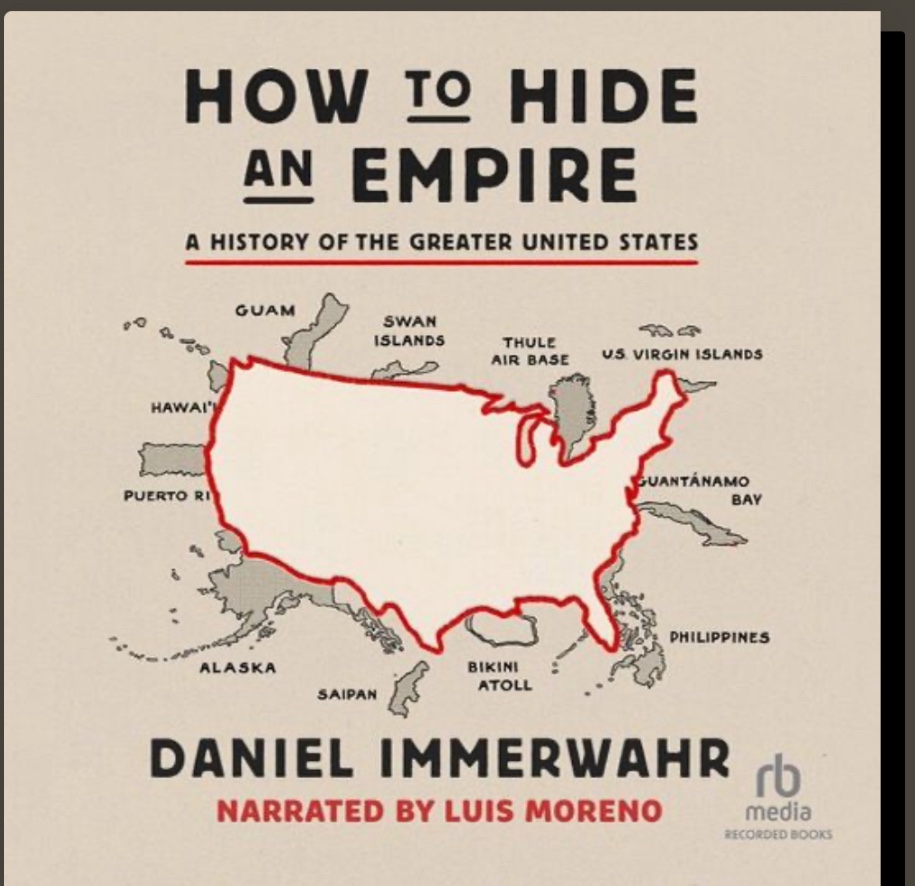
Review: How to Hide an Empire by Daniel Immerwahr (Read by Luis Moreno)

This is a history book written for a general audience and it is about the United States and its territories. It explores why we have expanded, when we have expanded, how we’ve viewed territories, and the consequences of the views for both the people in the territories and the people at home.

I learned a lot reading this. I was aware that the U.S. still holds territories and that it has held more and different territories in the past, but hearing about how different territories have been treated and its connection to things like race and immigration rules was eye-opening. Thinking about things like citizenship has consequences for things like voting in national elections, so even if we don’t currently hold the all the territories we’ve historical held, this part of our history is still important because it does still impact us today. (If you’ll recall from the previous Presidential election where some of our citizenry were surprised to find that Puerto Ricans are U.S. citizens, but they can only vote in the presidential election if they live on the mainland.)

So, this was good and I would recommend it. I also recommend getting it as an audiobook. Luis Moreno’s narration is engaging and it carried me through places where dates and details may have stopped me if I had been reading if off a page.

Review: Consent by Jill Ciment

I don’t remember where I heard about this book, but I thought, “Oh, that sounds interesting.” So, I put myself on the waiting list for both the physical copy and the audiobook at the library. The audiobook came available first and I checked it out but I couldn’t make myself start it. It was something that I wanted to read and yet I was having trouble even beginning to read it. There was just something about the subject matter that made me think, “Oh, this is going to be a hard read. I don’t know if I feel like reading something hard right now…” And, I kept coming up with excuses until I had to return the audiobook unread.

Well, when the physical copy became available, I went and got it. The memoir is only 145 pages, so it is a little whisp of a book. That made it seem a little less daunting. (Although the audiobook is only four hours so, I don’t know what my deal was.) And it wasn’t hard to read. The prose was thoughtful and I was pulled into the story. Ciment’s memoir is about her relationship with artist Arnold Mesches and is part a revisiting of a previous memoir Half a Life and in part just a new memoir about a marriage seen from a new perspective. The story starts at the beginning of the relationship when she first started taking art classes from Arnold as a sixteen-year-old and follows through his divorce from his first wife, their marriage, and their life together up to his death at the age of ninety-three.

I think I was expecting something more negative and maybe not so much critical, there is nuance here. And a lot of questions are posed that the text really doesn’t answer. What we see is a relationship, the give and take and the joys and sorrows, just like you would have in any relationship. But there was also an investigation of power and understanding. Ciment tells us about being a teenager or someone in her early twenties and feeling powerful. She talks about when she felt jealous. She talks about when she felt supported or when she had to be supporting. As someone looking at a relationship that is now over, she has the 40,000-foot view, but also the memories of what it was like being inside it. She discusses how things that are obvious in hindsight, like how it feels cliche to think that she was, as a sixteen-year-old looking for a father figure, whom she found in someone her father’s age, but how clicheness of it part of the truth that we shouldn’t look away from just because it feels obvious. Ciment discusses what it is like being the younger woman, even as they age, and what that meant for her, watching her partner fall apart when she is still very much in her prime. I don’t know, I think I was expecting this to be more condemning of the relationship, but it wasn’t and I’m glad it wasn’t. Even though there was a power imbalance and even if, at seventeen, she hadn’t been considering what it would mean to be married to someone so much older than her, she still had agency and she exercised it. Following his divorce from his first wife, her husband had an artistic revival, something that may never have happened to him otherwise. And she went from painting to conceptual art to writing, a path she might not have otherwise taken without his support. This was thoughtful and interesting. And it left me with more questions than answers. I’m writing this review hours after I finished reading the book (so I could reference it before I have to return it to the library), but I have a feeling this is a memoir I am going to consider for quite a while.

Review: Readme.txt by Chelsea Manning

So, here are things that I knew about Chelsea Manning before reading this book:

  • She is a transwoman who was in the US military during Don’t Ask, Don’t Tell
  • She leaked some documents
  • She went to prison for leaking some documents

But, I knew there was more to the story than those things so when her memoir came up in my recommendations, I thought it would be a good idea to check it out. Manning narrates the audiobook, and hearing her story in her own voice made it feel very personal. She discusses growing up in Oklahoma, realizing she was trans, and the problems that caused for her at school and at home (although she didn’t come out as trans for a long time.) She talks about being interested in computers and finding a community. She talks about coming out. She talks about being homeless. She talks about struggling with being trans and how the army, with its enforced masculinity, was part of an effort to change something about herself. She also discusses at length her ideals, what brought her to join the military, and what eventually brought her to share classified documents with Wikileaks. The memoir then discusses her time in prison and the military trial that initially gave her a 35-year prison sentence. This was later commuted by President Obama before he left office in 2017.

I liked how Manning’s humanity is always front and center in this memoir. I mean, as a memoir, how else would it be? But still, as someone who doesn’t have a lot of interaction with military personnel, this reminder that they are individuals with their own problems, concerns, and ideas. I also learned a little bit about how intelligence gathering works, which was at times interesting and appalling. Thinking about what kind of information the government can and does track about people, for various reasons is something that I’m going to be considering for a long while.

I think transparency and a knowledgeable public are important for our democracy, and looking around the world today, with the US in the middle of a Presidential election and ongoing conflicts in Palestine and Ukraine (And Sudan and Congo and many other places where my attention hasn’t already been drawn), thinking about what America’s role is on the world stage and how information and the public back home is managed is important. I am glad that I read this, even if it was at times a very difficult read. Her time in prison and the descriptions of solitary confinement were brutal.

So, if you are interested in contemporary American history and would like to hear about it from someone who was involved, this is worth the read. But, go into it knowing that there are descriptions of solitary confinement, homelessness, war crimes, and mentions of suicide.

What I worked on in May while I was listening to audio books

As I mentioned in April, audiobooks keep me company while I’m doing other things. I listen to a lot of music while I’m working, too, but there’s something about having a voice in your ear that is just cozy. May was no different than April, I did a little listening while I was working on various things this month. I thought it might be fun to update you all on the projects that I mentioned last month.

I finished the shawl I was knitting as a sample! This pattern is made with Dream in Color’s Smooshy cashmere. I cannot gush about this yarn enough. It was so smooshy and so soft. It is a little spendy, but if you want a little treat, I would recommend it.

A shawl

I also made progress on the cardigan I started in April. I have finished the bits that will eventually become the back and hood!

Stacks of granny squares
Stacks of Granny Squares

After I finished the sample, I got really into The Starless Sea (review forthcoming), and had trouble focusing on anything but it. I also found myself a little aimless because I’d just finished something and I didn’t know where to go next. So, I started a bunch of things to see what would stick. I have been thinking about doing beaded lace for a year. I bought the yarn and some of the beads over a year ago. I’ve had the pattern for at least a decade. It seemed like a great thing to finally start. Except that it requires a ton of concentration. Also, it’s been about ten years since I’ve made beaded lace, so I had to do a little refresher on the techniques that are needed. I’ve restarted it 6 times. It might not be something that I continue to work on while I’m listening. Memorial Day weekend a started another shawl. This is in Dream in Color’s lamb and goat, which is also super soft and so luxurious. This pattern is called Striking and it is much easier. I can listen and do it at the same time. Excellent stuff!

Finally, I decided it was time to give up on a project. I love this pattern and this yarn, but I don’t believe that these two are good together. So, I will find new partners for both of them. The pattern is Pincha by Pinpilan Wangsai and it is a free pattern. The yarn is by Storyteller Yarns, a dyer from South Lake Tahoe. I love the colors; they’re so christmassy. I just wish I knew what to do with this skein.

A shawl that has been unshawled

So, what do you do while you listen to audiobooks? What have you been working on?

Review: Goodbye, Things by Fumio Sasaki, translated by Eriko Sugita and read by Keith Szarabajka

Every now and then, usually in the Spring when I have that itch to Spring clean and try as many new things as I can cram into my waking hours, I want to pick up a book on minimalism. The idea that you should have only the possessions you need, or at least the fewest possessions you can get by with, is nothing new. And even though I don’t really want to live a minimalist life, I am always a little curious. Fumio Sasaki has so few possessions, it takes him thirty minutes to move apartments. I look around my apartment and get an overwhelming feeling of not even knowing where to start if I wanted to move. So, as appealing as it sounds to be able to pick up and go at the drop of a hat instead of spending a month to pack up my place, what I realized when I was reading this wasn’t that I want to be able just abandon all my things and live with a toothbrush, a bowl, a cup, a spoon, my cat, his bowls, and his litter box (until I teach him to use a toilet, of course). What I want is to have more emotional space in my life. I would like some room, metaphorical but also physical, to grow.

In the end, this is what I take from minimalism. The Marie Kondo idea that if it doesn’t spark joy, I don’t need to keep it. I don’t need to keep something I am not using and don’t love, even if it was a gift. I don’t need to keep a piece of clothing, even if it will be cute once I lose another ten pounds. I don’t need to keep yarn I no longer love. And, gasp, I don’t need to keep books I know I’ll never (re-)read. That, in itself, is a daunting project. But, it is also exciting. I could have shelf space. Shelf space for new books that I am excited to read. Or, shelf space for something else. Who knows what’s out there?

This book (essay?) was short and it was okay. It wasn’t overly groundbreaking. The writing was economical and there were no turns of phrase that caught me and had me thinking days later. I have been thinking about the concepts of minimalism, but there’s a good chance I would have been anyway since I made a massive Spring cleaning list. So, in the end, this book gets a 6/10. I wouldn’t necessarily recommend it, but I also wouldn’t not recommend it.

Ally Box!

Greetings! About a month ago, I saw that Fulton Street Books and Coffee was putting together an ally box, containing books to help folks wanting to learn more about race, racism, and white supremacy in America. So, to further my education (and to be a better and more informed teacher) I signed up. The subscription is running for three months (and there are still some subscriptions available through Fulton Street Books website! Click through on that link above!)

In this first box, there are flash cards with key terms that you’ve seen popping up in the media and two books. They’re both books that are on my to-read pile and I am super excited about them. The first book is So you want to talk about race by Ijeoma Oluo. I think this will be an overview to some of the issues in the current moment.

The second book is The Color of Law: The Forgotten History of How Our Government Segregated America by Richard Rothstein. As someone who grew up in largely white communities, I think this one will probably contain a lot of information to help me better understand how I have benefited from our current systems that harm Black citizens and other citizens of color. Despite what I said about the first book probably being a good overview text, I think I’m going to start with the second one.

These look like they’re both going to be good reads, and I can’t wait to see what’s in the next box!

This Month in Reality: I stumble through a review of Hillbilly Elegy by J.D. Vance

img_5085

I finished listening to this read-by-the-author audio book well over a week ago and I’ve been trying to decide what exactly I wanted to say about it. On the one hand, it was a touching memoir about surviving with grit, perseverance and the support of your family (or, at least, the pieces of your family who had gotten themselves together enough to provide support). On the other hand, the wider cultural moment that this book was released into has kind of positioned it in this place where people can trot it out to say, “Look! White people suffer, too!” whenever a person of color points to some systemic issue that is causing a lot of suffering. And, while it does make some good points about the wider culture and how people are struggling and the systems we have in place aren’t adequate to support us, they were points that I had read elsewhere. Drug abuse, incarceration, broken families, and intergenerational trauma are things that have definitely been subjects of discussion for awhile, just maybe not in the mainstream.

But, that’s maybe not a problem of the book itself but its reception?

So, on the one hand, I shouldn’t blame a book for its reception and its use or misuse by its readership. On the other hand, if we’re not going to have these conversations now about how, “yes, there are class issues in America, but no they are not entirely independent of race and ethnicity and engaging with one without engaging with the others doesn’t paint the full picture”, then when are we going to have them?

So, I’m in this weird place where I was really touched by the narrative, and happy to have been given an example of another American life (because J.D. Vance’s childhood is pretty far away from my Suburban middle class upbringing). But, I still see this book in a wider context in which, if we addressed some of the race-related structural issues scholars, activists and politicians have highlighted over the years (for example, here, in Michelle Alexander’s book The New Jim Crow), people like Vance would also benefit. I mean, if we decriminalized drug addiction and made more money available for treatment and support, maybe Vance’s story would be a little different.

So, I don’t know. It was a really touching story and it has given me a lot to think about. This is a worthy result for any book, but especially a book of non-fiction. And, its not that I don’t recommend it, it’s probably more that there are other things that I’d recommend about class, family and culture in America before I recommended this.

Review: West Cork by Sam Bungey and Jennifer Forde

61dyps-nkcl-_sl500_

This podcast is an audible original and I picked it up for free when it first became available. My carpool buddy and I listened to the Dirty John podcast last fall and were really taken in by it, so when we heard about this one, we thought it might be something we would try. True crime isn’t really a fave genre for either of us, but it is nice to try new things.

West Cork is the story of a murder of Sophie Toscan du Plantier that happened around Christmas in 1996. It is also about the town of West Cork and the prime suspect. We were definitely taken in. The murder of Sophie is so tragic and the progress of the case was part infuriating and part just plain upsetting (which seems like a feature of true crime). It was interesting to be reminded about how technology has progressed so quickly. This was a time before cell phones and everyone having 6 email addresses and facebook. Sophie was out at her quiet vacation home in the middle of nowhere without any of the technology we have to stay connected today. Not that it would have made a difference necessarily, if the crime had taken place ten years later.

Some of the descriptions did get a little graphic, but overall Bungey and Forde do a really nice job of showing you the community of West Cork, the crime, and why the conclusion to this case so far has been no conclusion.

So, if you’re into true crime or you want to try something investigative, this is something you might want to check out!