Beth and Kate read: March by John Lewis, Andrew Aydin, and Nate Powell (Artist)

9781603093958_p0_v6_s192x300

This February Beth and I are going to be doing something we’ve talked about but haven’t yet done. We’re going to be reading a book together (or, three books as the case may be). Starting February 1st, we will be reading March by John Lewis. This award winning book tells the story of Congressman John Lewis’s coming of age in the Civil Rights movement. We invite you to join us in this reading. As we read, we will be posting our thoughts and open-ended questions. We hope that you will join us for the reading and some discussion.


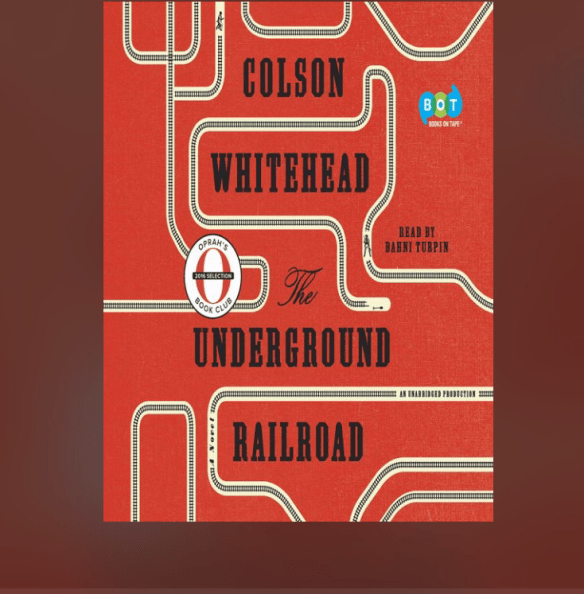
Review: The Underground Railroad by Colson Whitehead

img_0711


Friends, oh my god this book. It deserves all of the praise and all of the awards. And, it did win the National Book Award for Fiction! You should read it. As soon as possible. This book.


This is the story of Cora, a slave who runs away and escapes from the South on the underground railroad. Whitehead weaves a tale here that is smart and funny and makes so much of America’s history real. Cora starts by telling you of her Grandmother Ajarry and how she was taken from her village in Africa, put on ship and bought and sold in America. Cora then tells us about her Mother, the only slave to runaway from Randall plantation to never be caught. Then, she tells us her story. The narrative from the start makes plain that even “good slave owners” were not good by contrasting Cora’s owner with his brother. Yes, her owner doesn’t go in for harsh punishments or random beatings. But, he’s still indifferent to the plight of the humans who live around him (And, he still owns people, which, I hope we can all agree, is fundamentally wrong). Cora and Caesar make a plan to runaway from the plantation and to take the underground railroad. This is a bit of genius on the part of Whitehead; in this novel, the underground railroad is a literal railroad with station masters, conductors, trains, the whole lot. This gave the novel that magical realist feel. It also gave the story some mystery and gave me, and Cora, something to think about. “Who built this?” she asks. And, person after person says to her, “Who do you think?”

Caesar and Cora’s first stop on the railroad is South Carolina, which Whitehead has set up as a place where former slaves are slowly integrated into society. As part of the integration into society, everyone is required to have regular health checks. Some of the former slaves in town have “blood disorders” and have to come in for regular check ups. But, do they have blood disorders? Or, is something more sinister going on. If you know your American history, you can guess probably guess that something more sinister is going on and what that something might be. Additionally in this part of the story, Cora works in a museum, which allows Whitehead to compare the narrative of American history with the lived experiences of Cora and other slaves and former slaves in the story.

From here Cora moves onto North Carolina, Tennessee and Indiana, all while being pursued by the slave catcher Ridgeway. This gives the novel some tension while also pointing out how society put a wedge between lower income whites and slaves by making catching slaves a lucrative business.

From reading other reviews on Amazon, it seems like people either other or hate this book. (I’m obviously in the love category). One other reviewer said that “there was nothing new here, we know all of this from history.” I feel like this misses the point. Yes, Whitehead has incorporated a lot of American history into this novel. But, he’s done it in a way that his interesting and shocking and he’s given us characters we can sympathize with. This is a book that dramatizes some of America’s racist past and that gives us room to think about and interrogate our understanding of that past and our feelings about it.

I listened to this book on audio. The narration was done by Bahni Turpin and she gave the characters life and personality. I really enjoyed the work she did on this.

I checked this book out from the Buffalo and Erie County Public Libraries.


Review: The Reader by Traci Chee

So, Beth already reviewed this book and I wasn’t paying attention at all when I started reading it that we already had a review of it. To be honest, I was just thinking to myself, “crap, I’m going to fail my own challenge! I have to step up my game!” (And, then I did go and fail my own challenge.) This book was totally worth the read. It is a number of stories that are intertwined. The first is the main narrative about Sefia, a young girl who has lived as a nomad with her Aunt Nin since her father was murdered and after her Aunt’s kidnapping has to go it alone in order to find her Aunt and take her revenge against the rescuers. Along the way she meets Archer and is hunted by the kidnappers. The second narrative is the story of Lon, a fast learner and apprentice to the Master Librarian of a Secret Society. And, then there is the story of Captain Reed and his ship and crew that are bound for the edge of the world.


I listened to this book on audio and it absolutely sucked me in. The book was read by Kim Mai Guest and she did an amazing job of bringing all of the characters to life. Like Beth, I cannot wait to for the next one to come out!


I checked this book out from the Buffalo and Erie County Public Libraries.

Diverse Narrators, Diverse Lives Challenge

Diverse Narrators, Diverse Stacks.jpg

Our second challenge of the year will be led by Beth! It is a challenge focused on story tellers and their perspectives. We give you, the Diverse Narrators, Diverse Lives Challenge! There are fifteen books in this challenge and they are all character focused. The books can be either fiction or non-fiction. Beth will be leading this challenge because she tends to read mostly  fiction. There are a lot of different character-driven stories out there in the world, and she is great at finding them!

So, if you are looking to read books from many different points of view and you’re interested on exploring some new characters and perspectives, please consider taking this challenge!

Diverse Authors, Diverse Lives Challenge

diverse-authors-diverse-lives

Our first challenge of the year will be led by me, Kate! It is a challenge focused on content creators. We give you, the Diverse Authors, Diverse Lives Challenge! There are fifteen books in this challenge and they are all author focused. The books can be either fiction or non-fiction. I will be leading this challenge because I tend to read both fiction and non-fiction, so it makes sense for me to focus on authors and not on characters.


So, if you are looking to read books from many different points of view and you’re interested on exploring some new authors this year, please consider taking this challenge!

New Year, New Challenge!

Last year, Beth and I started the Diverse Stacks, Diverse Lives Challenge. Our original challenge is made up of three mini challenges containing ten books each. There is an author challenge, a character challenge, and a medium challenge.

It turns out, if you can’t double count things, that this is not the easiest challenge to complete. I, at least, failed to complete it. This year, Beth and I decided to do something a little different. So, we’re going to have two challenges, one that Beth is going to lead and one that I am going to lead. They will be announced this week. We’re both very excited about it. We hope that you will be excited, too, and will join one or both of us on a reading adventure!

Top Eight for 2016!

Well, Ladles and Jelly Spoons, today is the 31st of December, 2016. That last day of this year is finally here and I am finally getting around to my faves of this year. (Beth, of course, has been on the ball all year and has already gotten this done.)

I set my goal for reading this year intentionally low at 35 and then changed it to 30 when it appeared I wasn’t going to make it that far. Then, I only made that because I drove to my parents house for Christmas and they live 13 hours away from my house. Just. Under.The.Wire. But, I’m thrilled to pieces that I did. So, without further ado, I give you my top eight.


  1. The Martian by Andy Weir 
    Y’all, I know I was behind the times with this one, but it is so good. You owe it to yourself to listen to this on audio. The book was so good and R.C. Bray really brought it to life.
  2. Year of Yes by Shonda Rhimes  
    This book made Shonda Rhimes my hero. She is so inspirtational.


  1. The Raven King by Maggie Stiefvater
    Will Patton does a knock-out job of reading this book. And, you may have noticed, but Beth and I both have a big ole crush on Maggie Stiefvater’s writing.
  2. Kindred by Octavia E. Butler
    This is maybe the most interesting vampire novel I have probably ever read. Plus, the presentation of race and gender going back in forth between modern times and the antebellum South was amazing.
  3. The New Jim Crow by Michelle Alexander
    I’m still working on how to use everything I learned from this book. Alexander lays out a persuasive argument and backs it up with well-presented research.
  4. Bitch Planet by Kelly sue DeConnick
    In this dystopian future, the world is full of interesting and awesome women who are treated like garbage and shipped off to a prison planet. God, I hope this isn’t prescient.
  5. Americanah by Chimamanda Ngozi Achidie
    Achidie has her finger on the pulse of race relations in America and the story she spins is full of humor, tenderness and amazing characters. I loved this book so much.
  6. Emperor of Sound by Timbaland from childhood to sought after producer, this memoir tells the tale of Timbaland. I really enjoyed this walk through ’90s and -’00s music.
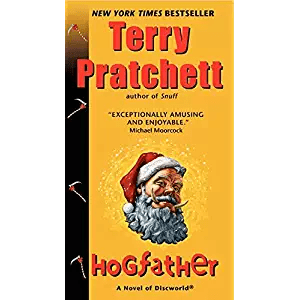
  7. The Hogfather by Terry Pratchett
    510pwujvb4l-_ac_us300_fmwebp_ql65_ The Hogfather, the Santa figure in Discworld, has gone missing on his most important night of the year. It is up to Death, his assistant and his granddaughter to save the day. This book is funny, clever and such a good read (or, listen, as the case may have been.)
  8. Call my by my Other Name by Valerie Wetlaufer
     call_me_by_my_other_name_front

This is a story told in poems. The story, based on two historical figures, is about two nineteenth century women living as husband and wife told by a modern narrator. Wetlaufer spins an amazing story of love and heartache. She does a great job not putting twenty-first century categories on these historical characters. I loved the distinct voices of these poems. This is such a good book.


This has been a fun year of reading. I started a bunch of books in 2016 that I haven’t yet finished, so look for all of those reviews (Between the World and Me by Coates, Whipping Girl by Serano, Princess Diarist by Fisher, The Federalist Papers) in 2017!


Review: Field of Flight by Michael T. Flynn

51rxlibe4ll-_sl300_


When I started this book, I was fully aware that it isn’t my kind of book. But, I thought, you can’t have a conversation with someone if you don’t know what they’re thinking. You can’t have a conversation with someone if you don’t listen.

So, I listened. And, for starters, this is not well written at all. If this book had an editor, they should give whatever they were paid back because they did not do their job. There was a whole autobiographical part at the beginning that was completely unnecessary (or, it was a different story altogether). I think it was meant to establish Flynn as an authority on military intelligence, but I spent most of this section trying to figure out why he was telling us the things he was telling us. I then spent some of the later chapters trying to figure out how the first chapter related to it. If you’ve read other reviews of this book (I can’t stop myself after I finish a book from seeing how other people liked it on goodreads), you will know that it was full of typos and other copy-editing issues. Audiobooks don’t have problems with typos.  But, even without seeing the errors, this text was still… just not very good. It seems like Flynn has a huge ax to grind against “being politically correct” and “not calling Islam what it is”. Sorry, not calling “Radical Islam” what it is. But, he also seems to not wholly be on board with making a distinction between radicals flying an Islamic flag and non-radical followers of Islam. I mean, he’s willing to say the words that not all Muslims are radical Muslims, but most of the rest of the book I felt like he wasn’t making that distinction. And, I need this to be clear. Just like I’m sure we can all agree that not all Christians are the Westboro Baptist Church and that not all Atheists are Ricky Gervais or Christopher Hitchens. Some of them are really chill people.

He also doesn’t seem to think that Islam as a religion is any different than Nazism and Fascism as belief systems. That is pretty troubling, especially when you can be both Islamist and Fascist. There were more troubling things about the texts. He seems to call for more critique from the Muslim community of the Radical actions of parts of the community. I don’t know what part of the world he’s in, but I’ve seen plenty of critiques coming from the Muslim community. (There’s a facebook group called Muslims against ISIS and there was a convention this summer to reject ISIS in the UK. Back in 2014 a number of Islamic scholars wrote an open letter to the ISIS leadership about why their state was not supported by Islamic texts. Maybe instead of calling for this kind of critique, we should cover it when it happens in the news?) Flynn also is worried about the education system in the Islamic world. He points to the number of schools (madrasas) where children are taught by memorizing passages of Koran, which is a disgusting level of indoctrination. Depending on the actual amount of that that is happening, that is really troubling. But, hooo, boy, if you want to talk about troubling things in education systems, you don’t have to look that far from home to find upsetting things. How many of our students here are being taught one specific line and never to question that? Shouldn’t we be upset by that? (Especially when that’s something we could immediately do something about?) The text also seems to suggest that we’ve been openly hostile to Israel, our best ally in the Middle East, of late. But, I thought we just promised Israel some billion dollar amount of military aid? (With strings, sure, but what agreement doesn’t involve some kind of give and take?)

Anyway, what I got from this book is that there are RADICAL ISLAMIC FORCES in the world that want to destroy America and replace all democracy with an Islamist theocracy and leadership that encourages citizens to spy on each other. To avoid this terrible future, we, the Judeo-Christian democracy-loving West, need to fight Islam, and private citizens/companies should help gather data on these anti-democratic forces.  So, basically, in order to remain Christian and free and not become Islamic and afraid our neighbors are spying on us, we should be anti-Islamic and spy on our neighbors. Of course, I’m reducing and parodying his argument here for effect, but there was a lot of anti-Islamic rhetoric here. I’m for freedom but I know we live in a complex world, so I’m not all that happy when our leaders (and their potential advisers) seem incapable of nuance.

Normally at this point in the review, I tell you, “hey, if you like X kinds of books, then check this one out!” And, I guess I kind of can. If you believe the Islam is everything that is wrong with the world, then this book is for you. It was written to preach to the choir. Or, at least I hope it was written to preach to the choir. If it was written to lay out a reasonable argument and sell people an idea, it failed.  This book was a mess. It was not well-written. It had all kinds of troubling reasoning and it didn’t make any kind of solid case. It played with stereotypes and stated it was making distinction that it then failed to maintain.  Zero out of ten. Do not recommend.


I got this book from the wonderful and amazing Buffalo and Erie County Public Library.