A mystery with sheep! It should be fun.
A mystery with sheep! It should be fun.

Very occasionally, the interests of my work life and this blog align. This past year, it feels like that has happened more than any other time in career. I’ve been teaching some new-to-me courses in a different department than my home department, teaching some required general education Humanities courses. This has been delightful. I’ve gotten to interact with many students I would have never had the chance to interact with. And I’ve gotten to read (re-read) some classics, some foundational texts, and some big-named thinkers. The Humanities are important because we are important, to ourselves and to each other. These courses I have been teaching allow students to practice important skills around critical thinking and effective communication, but they also give them space to really consider big concepts that loom in the background of our days and define them for themselves. It seems silly to ask, in part because it is so ubiquitous, but what actually is ‘modernity’? Or, ‘progress’? How about ‘what does it mean to be American?’ But the answers to these questions can have very real world consequences. Definitions of modernity can classify useful and important things as out-dated and old-fashioned. For example, do students need writing skills or do they just need to know how to use AI templates? Definitions of progress can have huge impacts on what we require of students, what we expect from companies, what our government’s policy goals are. When we decide what counts as progress, we decide what our priorities are. For example, is generative AI progress? And for the impacts of what it means to be American, you can look at the headlines. The courts are debating who actually falls under birthright citizenship right now.

Two times this Spring, I had the opportunity to revisit classic works in the course of my teaching.The first is Frankenstein by Mary Shelley. I dug this out of the back of my bookshelves from when I was an undergraduate. This classic novel is a seminal work in sci-fi and horror and tells the story of Dr. Frankenstein, a man who never once stops to ask himself if he should, just because he can. I have discovered teaching this book (and from interactions that I’ve had with people on fable), that if your only reference to Frankenstein is pop culture, that you might be expecting this to be centered around the monster. And, it is, except the monster isn’t the creature. Dr. Frankenstein does this massively unethical breakthrough science and then fails, repeatedly, to take responsibility for the consequences of his work. Even though this was first published in 1818, it still feels very relevant to me. A perennial topic for opinion pieces (and for my student’s writing this past year) has been the cultural divide we are seeing and the idea that many of us are living in an echo chamber or are siloed off from ‘the rest of the world’. Dr. Frankenstein lives in this bubble where he thinks about his ideas and how to apply them and then doesn’t step back to seriously consider the implications of those applications. This is a theme that my students have been picking up on and that really resonates with them. It’s like voting for a politician because you like one idea that politician discusses without considering what that would actually mean for their own lives.
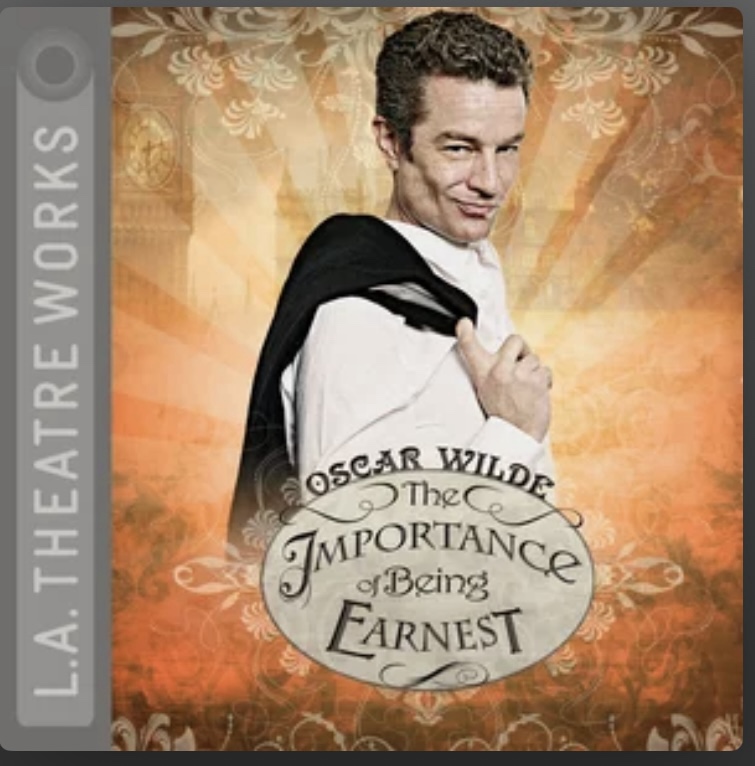
The second overlap was The Importance of Being Earnest by Oscar Wilde. I listened to the L.A. Theatre Works production that I got from my local library.This is such a fun play as Wilde pokes fun at Victorian sensibilities and their obsession with appearance by punning off the word “Earnest”. In the play, two men discover that they are both playing similar games. They have a secret alter ego that they are always in need of rescuing that allows them to escape from the seriousness of their lives. This backfires a bit they fall in love with women who are both smitten with ‘Earnest’, one of the secret alter egos. This play is so silly and so fun, but it also something that my students have really enjoyed digging into. As largely members of Gen Z, they have grown up with the internet and very aware of what its like to live in a time that is utterly obsessed with appearance. For them, it might be how they express themselves on social media, but they still are able to draw parallels with the Wilde text.
It is a delight to be able to discuss reading with people who don’t always identify as readers themselves. Beth and I are obviously into reading for fun, but not everyone is, so their perspectives on classics are informed by other things beyond the written word. And it is always interesting to hear what people have to say about the connections they make between classics and their lives. It is also so important to connect with people and to think about big ideas. When we get caught up in the details of our lives (bills, health, jobs, family, etc.), we don’t always leave ourselves time to think about things and enjoy ourselves. But we should, because our humanity is important.
While there are six novels in this series, there were only three available as audiobooks from my local library, so this is going to be a quick review of the three that I have read. I’ve read 1,2, and 5, so while I’ll eventually get to the others, and that was definitely notable. So, spoilers ahead.

Snowblind follows the story of Ari Þór Arason. He is a newly minted police officer, fresh out of the academy, who takes a job in the town of Siglufjorour near the Arctic circle. Siglufjorour is the kind of place that has cruise ships of tourists stopping in the summer and is potentially cut off from other places because of snow in the winter. In his first big case in town, a young woman is found unconscious and bleeding in snow and then a writer, who is a national treasure, is found dead. Ari Þór starts uncovering local secrets in a place where no one locks their doors. He has to decide who he can trust and who he should believe, while also juggling upheaval in his personal life as his girlfriend, back in Reykjavík, isn’t thrilled by his move North. This was an interesting tale and I liked a lot of the side characters, but I wasn’t sold on Ari Þór as a character.

Blackout is set in the summer when one can expect 24 hours of light in the Northern town of Siglufjorour. However, a volcanic eruption’s ash cloud turns that bright summer days into twilight. A man is found beaten to death near a fjord and Ari Þór and the other member’s of the police force are set out to investigate. A young journalist relocates North from Reykjavík in order to investigate as well. This is a dark and twisty kind of story where pieces of the past are uncovered while our main characters are dealing with both personal horror and the ongoing horror of the murder. I liked the introduction of the reporter and her perspective, although I’m still kind of meh on Ari Þór.
Okay, so this one took a huge leap into the future because I didn’t realize at the time it was book 5 in the series. Oof. But this might be my favorite of the bunch. One of Ari Þór’s colleagues is murdered. The setting of the murder raises questions, the local politics of it all raises questions, Ari Þór’s uneasy relationship with the locals is a bit of a sticky point. There are lots of elements of human tragedy in this novel, and it kept me hooked and also really pulled on my heart strings.
Overall, I would say that this is an enjoyable series, but if I had to recommend just one of the Jónasson’s series, I would recommend the Hidden Iceland series. There is something about Ari Þór that just kind of rubs me the wrong way. I was a bit annoyed by the number of his problems that were entirely of his own making. But, the main character in Hidden Iceland is a middle aged woman, who it might just be that I have more in common with her than I have with a brand new police dude. So, if you a brand new police officer patrolling the fjords and snow-covered roads of Northern Iceland sounds interesting to you, or if you just like murder in a small town tales, then these are for you.

Another excellent find from my local library. Told from two perspectives, it follows the story of a journalist and his sister as they unravel a cold case of a missing girl. Set in and around the city of Reykjavik, in 1956 a young girl named Lára goes missing after working the summer for a couple on an island near Iceland’s capital. The case becomes infamous and on its 30th anniversary (which happens to be the same year as city of Reykjavík’s 200th anniversary) a journalist decides to profile the case. It’s a great choice for selling papers, but as he uncovers more of the story, it becomes clear that it might not be a great choice for his health and safety.
Ragnar Jónasson’s story structures have a bit of Agatha Christie about them and they also have the noir vibe of really digging into the pain and cruelty and darkness of human existence. I thought the ending was clever, but it did raise some questions for me but earlier investigations which have been fun to think about.
So, if you like noir or mystery or political thrillers or, like me, you’re just obsessed with thinking about Iceland (in my defense, I live in the desert so it could not be further from my everyday environment), I recommend this.
Oh, also one last thing, Katrín Jakobsdóttir is a former prime minister of Iceland and that tickles me. I love it.
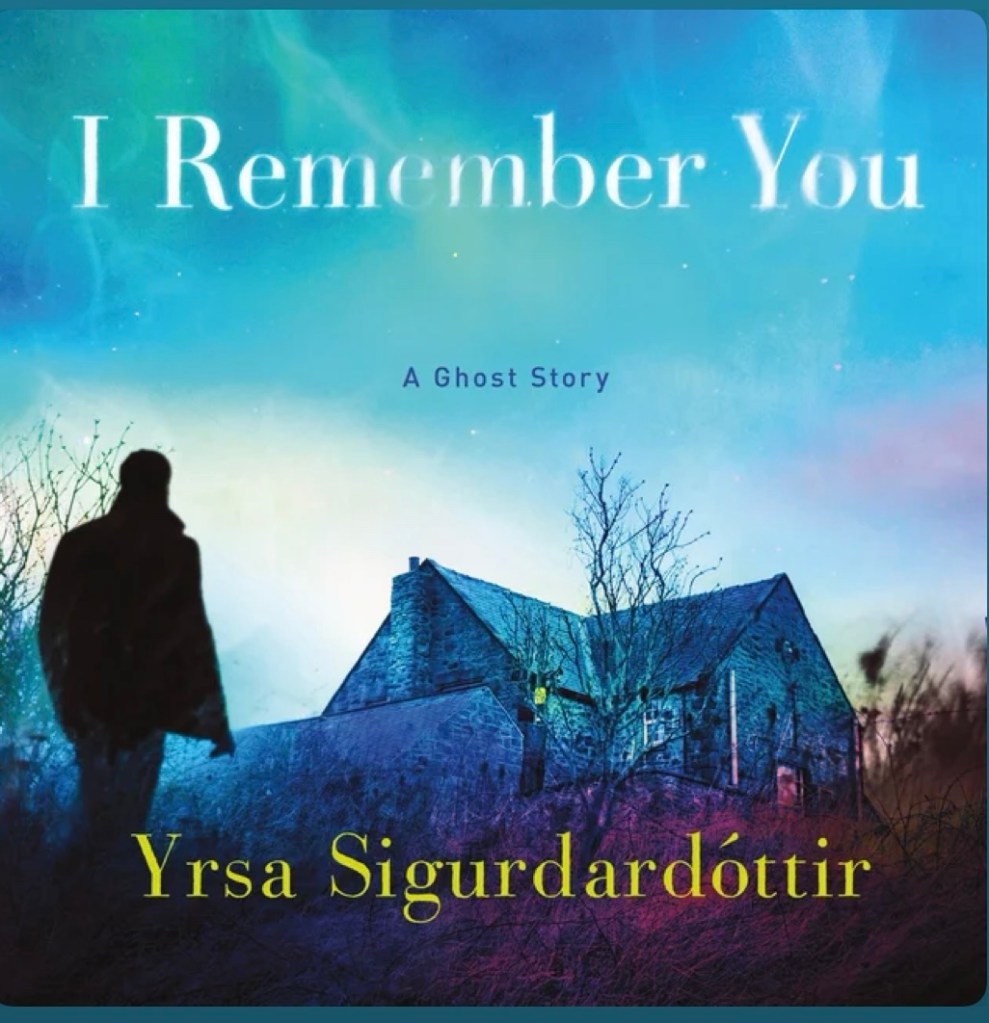
My obsession with Icelandic noir continues with this creepy little number.

This was a book club pick way back in January and there’s no good reason why I haven’t already reviewed it. The story of Amina Al-Sirafi and her legendary pirate crew as they come out of retirement for one last job. Amina doesn’t particularly want to leave the safety of her home and her daughter, but when a fallen comrade’s daughter, Dunya, runs off with a dangerous, European treasure hunter, she can’t help but take the job.
The story is told as an interview, with two narrative voices. Amina speaks to her scribe, Jamal. She tells the story of the present narrative of the search for Dunya with flashbacks that fill in what happened to her fallen colleague, why she retired, and how she came about building her crew. The second set of narratives are told by Jamal and they tell the tale of the Moon of Saba, a legendary treasure.
The adventure in this was exciting, the characters were delightful, and the ending was very moving. I really enjoyed this one and I do believe that there will be a sequel, which I’m pretty excited about. If you like pirates, adventure, mystery, treasure hunting, or found family, then this one is for you!
The library is one of my favorite places. I get more than half my books from there. This week I had to stop at the library on the way home from work and a friend commented on how that was unusual. He didn’t know a lot of people that still go to the library. (He is more of a libby person, which counts as also going to the library to me.) So, I thought this weekend would be a good time to celebrate the library. So, here are three picks where libraries feature in the plot.

In a world where there is magic and it is found in bits of meaning that never quite get translated, Robin finds himself whisked away to England from his home in Canton so that he can prepare to go to the prestigious translation school at the University of Oxford. This is a thoughtful and devastating look at colonialism and the struggle that everyone, particularly those from outside of the colonial core, must face when they consider what is lost or gained by contributing to the empire. I loved this book and if you like dark academia vibes that make you really consider the world, this a pick for you.
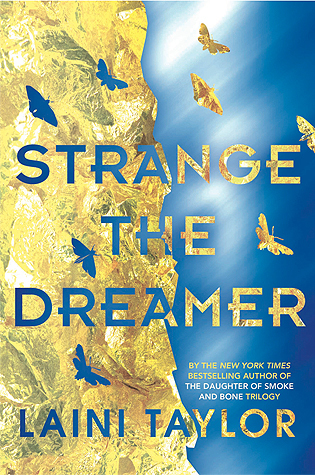
Strange the Dreamer by Laini Taylor
Beth and I both loved this one. In fact, this is one that I have both gotten from the library (audiobook) and from Beth’s shelves. This story follows Lazlo Strange, an orphan and a dreamer, who is raised by monks and grows up to be a librarian. During his studies, he falls in love with the stories of another place, Weep, that has a tragic history that is slowly revealed as part of the novel. When an envoy from Weep comes to his city, Lazlo does everything he can in order to become part of the delegation that will return to Weep. Strange is such a lovely soul. This was an interesting story with romance and terror and gods and monsters. If you like stories that include their own mythology, this is one for you.
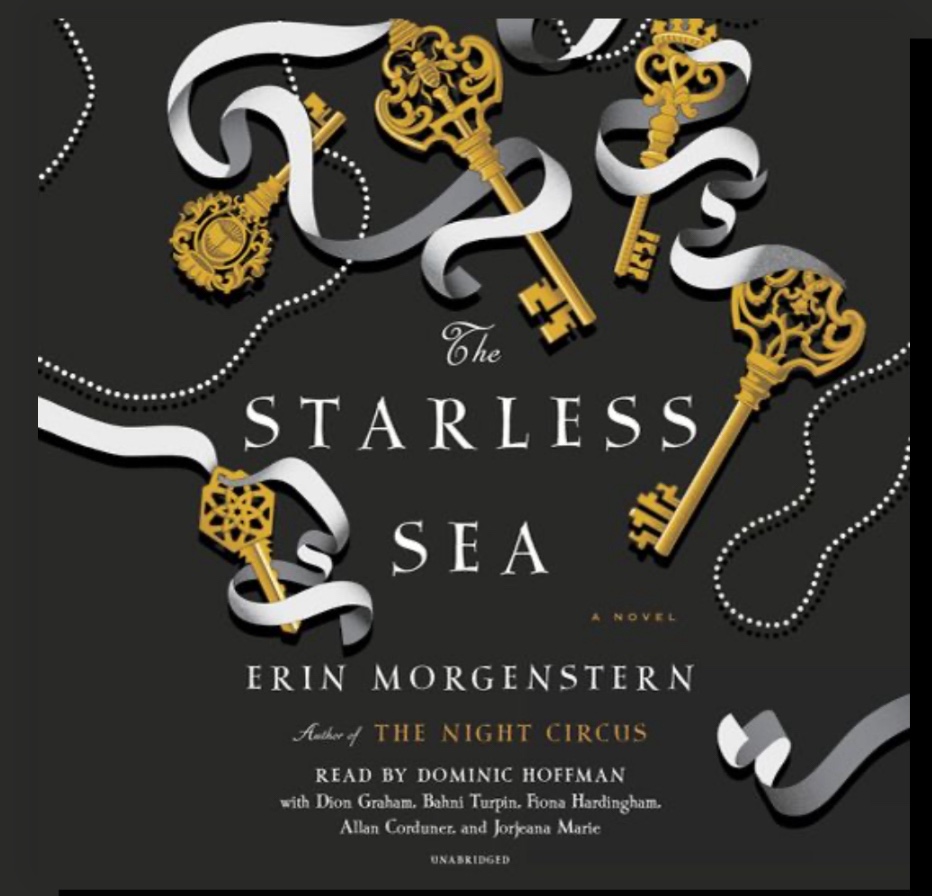
The Starless Sea by Erin Morgenstern
I picked this up on the recommendation of my friend Cristin (further recommended by the audiobook including narration from one of my favorite readers, Bahni Turpin), this is another adventure with its own mythology. Our protagonist, Zachary Ezra Rawlins, is a grad student who studies video games and takes some time in between semesters to indulge in one of his favorite hobbies, reading. Everyday he goes to the library and picks up some books that catch his attention. He finds in the stacks a mysterious book that doesn’t seem to be catalogued correctly and he’s launched into an adventure that takes him everywhere and nowhere. There are assassins, thieves, different timelines, lost cities, bees, secret societies, and so much more. This is a story that has stories inside of its stories and it is a wild ride.
So, there you have it. Three books that feature libraries because libraries are always strange and magical places. Do you have a favorite book that is either set in a library or features a library or librarian? Let us know in the comments!

I have no idea what this is about but everyone in my knitting group loved it, so I’m excited it’s finally available from my library!

Last month I went to a yarn swap, where knitters and crocheters went through the yarn they had at home for things that bought but that they knew they wouldn’t use. We then ‘shopped’ each other’s yarn stashes. During the swap, I picked up this kit for some cute little wrist warmers.

I’ve been on the waiting list for this book since the beginning of June. So, when it came available right as I was finishing House of Hollow, I knew it would be a perfect match for a new knitting project. Briseis is a gardener and magical, so starting something with a leafy motif seemed ideal.
 2 Women, So Many Books