

**Spoilers**
This was a credibly well written and crafted novel. I was really taken in by this family and their struggles and triumphs. Pachinko follows one Korean family from 1910-1989 from their home in south of Korea to Japan. When Yangjin’s daughter sixteen year old daughter, Sunja gets pregnant and the father can’t marry her. a boarder at her boarding house agrees to Marry her and take her to Japan with him to spare her and her family any shame. Being a Korean living in Imperial Japan at the time was not easy. They were often discriminated against and limited in their movements thanks to racist policies. As the family tries to find ways to survive through poverty, war time and other personal tragedy it tears them apart and brings them together. If there is one thing that I got out of this novel is that no matter where women live, what their station in life is or what religion they practice. Their choices are pretty shit. Sunja finds herself pregnant from a secret affair with a wealthy businessman. When she finds out that he can’t marry her because he already has a wife and three daughters back in Japan she walks away. His offer of being his Korean wife and him buying her house and taken care of her is not enough. She will never be his true wife but also being an unwed mother will bring shame on her and her family. When a young pastor falls ill in her family’s boardinghouse, she and her mother help him get better. Isek is convinced he was sent to them on purpose to help them as they helped him so he agrees to marry her and take her with her to Osaka. This will spare the family of the shame. At 16, Sunja choices are to be destitute and shunned from society or marry a complete stranger and move to another country. Isek is a kind man and takes good care of her and their sons. He raises Noa as his own flesh and blood and does what he can to provide for his family and his brother and sister in law. They do grow to have mutual understanding and good marriage. It’s a shame that Isek dies early in the book due to unfairly imprisoned for political reasons but I wanted to know more about him. Their children Noa and Mozasu are two very different children. They both struggle to find their identity as Koreans born in Japan and lived their whole lives but still looked at as foreigners. I’m sure this is something many children of immigrants can relate too. Noa and Mozasu both represent the “good Korean” and the “bad Korean”. Noa was always the good student who believed that if was good, if he studied hard and was the best in his class who would be able to overcome prejudices and be accepted only to ultimately discover that years of hate is not easily overcome, particularly when the hate comes from within. Mozasu on the other hand understood early that you can’t change people’s mind. If people wanted to label him the “bad Korean” he would comply and ultimately was able to succeed.
I’ll admit I know very little about Korean history or their relationship to Japan. Considering we could be at war with North Korea very soon this seems like a big oversight on our parts. The Koreans were overtaken by Japan and forced in to be second class citizens in their own country. When they moved to Japan things were not better. They were limited on what jobs they could get. They had to live in a ghetto. Even their chosen professions were looked down upon. Pachinko, a kind of gambling was seen as criminal activity and often thought of us gangsters. After World War Two when Japan lost their war their situation became even more precarious. They were not anymore welcomed in Japan then before but with uncertainty at home they couldn’t go back to Korea. If they did, do they go back to North or South Korea. In a way they became homeless, which seems even sadder since for characters like Noa, Mozasu, Yumi and Solomon who were all born and raised in Japan. This is the only home they ever knew and yet they never treated like they belonged. There is a pretty powerful scene of Solomon, the son of Mozasu so 2nd generation Korean Japanese, having to go to the home department and register so he can stay in the country he was born in. I would say that would be crazy but then I remember what’s going on in our country and it doesn’t seem so crazy that a country would do that to it’s people. There is also discussions on women’s role. Sunja from the very beginning is a hard worker and finds it hard to stay stagnant. When Isek is imprisoned and the family is desperate for money, she steps up and starts selling kimchi by the train station despite warnings from his brother in law that women must work. She is industries and does what she needs to do to keep her family fed and sheltered. It is her strength that keeps the family going. At one point, Koh Hansu, who got her pregnant at the beginning of the story, shows up and sends them to a farm out of the city to save them from the end of the war. I was angry that after what he did and could just show up and play hero. Like how dare he? Sunja rejects him over and over again but he always comes back. So infuriating.
I’m glad that we are doing our Diverse Stacks, Diverse Lives challenge because I’m pretty sure that I wouldn’t have this book otherwise and I would have missed out on a wonderful story.
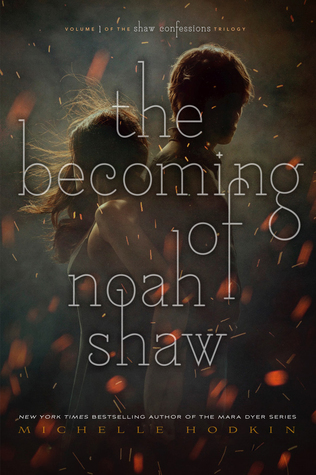 This is the first book in the Shaw Confessions Trilogy, a companion trilogy to the Mara Dyer Trilogy. I would recommend going back to read the original trilogy before starting this one and if you haven’t read the Mara Dyer Trilogy then read it first because this book will not make sense if not. I did not re-read the last series and I found myself hitting up google looking for synopsis to remind myself what happened. The Retribution of Mara Dyer came out in 2014 and so much has happened in the last three years it’s easy to forget who Stella is and what happened between her and Mara. What I remember about the original series was how kind of creepy it was. Is Mara really seeing hallucination or can she really kill people with her mind? The first book was a mind trip. This was a little bit more straight forward mystery. It’s a few months after the ending of the last book and other carriers or gifted teens like Noah, Mara, Jaime and Stella are disappearing and then committing suicide. The problem is that they don’t want to and what do these disappearances and suicides have to do with Noah, Mara and what has done to them? Well we don’t get a lot of answers but then again we do still have two more books to go. What we do get is more incite into Noah. The complicated but loyal boyfriend Noah. He is a kid who has every privilege in the world but doesn’t see the point in living until he meets Mara. What happens when he doesn’t have that anymore? Also the question used to be is Mara crazy? Now it’s is Mara a psychotic killer? I’m really going to have to back and read the first trilogy again.
 “By relegating the things we fear and don’t understand to religion, and the things we understand and control to science, we rob science of its artistry and religion of its mutability.”
 **Spoiler Alert**
 So let’s talk the controversy. I was excited about reading this book because I thought it sounded interesting and was curious how Veronica Roth would follow up her Divergent series. That was until reviews started to come in and people began talking about the racism surrounding the plot. Now, I don’t necessarily think it is intentionally racist but it is definitely problematic. So the plot revolves around two different races of people who share the same planet. The fair-skinned, peaceful Thuve people and the dark-skinned warrior race Shotet. Right there raised flags for me. That the more violent people are described as being dark in skin, eyes and curly hair versus the more light skinned, blue eyed, straight hair peaceful neighbors. Everything about the Shotet’s is described violently from their language to their tradition of marking their arms with every kill. It brings up images in our society about we are programmed to think that those with darker skinned are more dangerous then those of us who have lighter skin tones. That the lighter skinned people are somehow inherently just better people. And that is why at first I felt a little uncomfortable reading it. However, it didn’t turn me off either. As the story continued, I became more invested in the characters Akos and Cyra. I don’t think ever really got past the uncomfortableness of it but I did want Cyra to best her abusive brother and Akos to rescue his. They compliment each other really well. Cyra has a gift for pain. Pain that she inflicts on others but also lives in her while Akos gift is that he nullifies the current. In this world, everyone has a gift granted by the current. Each gift is different depending on the person. Cyra brother is the ruler of the Shotet people and has been using her as his own personal torturer. She has gained the reputation of being cruel when she is only doing what she is told to do but deep down she knows that she deserves the pain she feels thanks to her painful history. Akos is kidnapped by the Shotet with his brother when their fates clash with the Shotet ruler. Both Cyra and Akos really grow throughout the novel. They both see in each other that they don’t have to be what they raised to be. That they can choose their own paths. The ending was a little meh but it did pose one interesting question that makes me at least interested in the sequel. It might be too late for Veronica to fix the unfortunate world building choices in the sequel but I do hope that in the future she takes more time to ask herself, why she is making these choices in her writing. Is it because this is who the character really is or something that has been internalized in herself coming out on the page.


