
In the spirit of our month of Vampires. I’m going back and reading one of my favorite Vampire books to see if 10 years later it’s still as good as I remember.

In the spirit of our month of Vampires. I’m going back and reading one of my favorite Vampire books to see if 10 years later it’s still as good as I remember.

Today we continue with Jonathan Harker’s journal. He is not in a good place, folks. Pray for Jonathan.
And, now, once again, for the technical details. The novel is Dracula by Bram Stoker. It’s read by Kate. The music is Oppressive Gloom by Kevin MacLeod (incompetech.com) (Licensed under Creative Commons: By Attribution 3.0 License
creativecommons.org/licenses/by/3.0/) and this was edited in audacity.

The adventure continues!
In this chapter, we meet Dracula, check out his castle, and wonder why it took Jonathan Harker so long to realize something was up. But, first, here are some technical details. The novel is Dracula by Bram Stoker. It’s read by Kate. The music is Oppressive Gloom by Kevin MacLeod (incompetech.com)
(Licensed under Creative Commons: By Attribution 3.0 License
creativecommons.org/licenses/by/3.0/) and this was edited in audacity.
Chapter 1 can be found here.
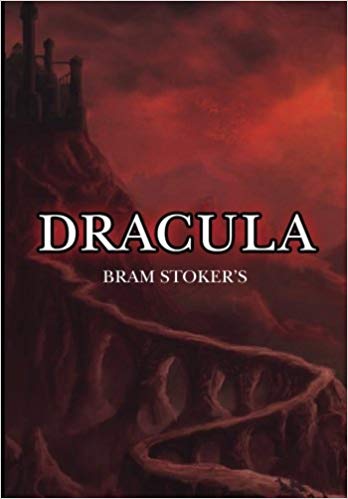
I mean, it seems obvious, but it doesn’t hurt to say it. I’m reading Dracula right now
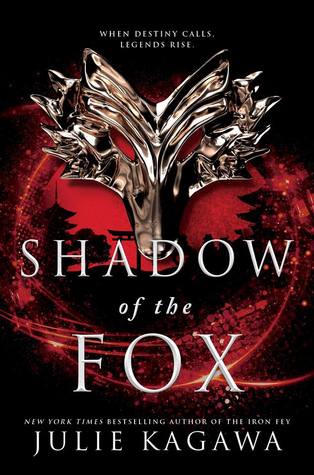
Really looking forward for this one!
 In retrospect, reading a book that deals with abuse and the affects it has on it’s victims, may not have been the best thing to read right now. Between the news and this, it was a lot. However, at least here, we see people believing and supporting each other as they deal with their own individual traumas. This is a supplement story to the A Court of Thorns and Roses series. Pretty much every character has endured one form of abuse or another and their recovery is very much a big part of the story as the looming conflict about to come. The Night Court is still recovering from the battle with Hybern that lead to many deaths and the fall of the wall between the Fey and human lands. The Solstice is coming up and Rhys, Feyre, Mor, Amren Cassian, Az, and Elain are looking forward to taking time away from their responsibilities to celebrate. The one not dealing with the events of the last book is Nesta, who has withdrawn from the group. Only time will tell what will happen with her. This book didn’t do much to advance the story too much but allow for some light moments that we won’t get to see in the following books as this is really the calm before the storm. The end alludes to the dangers that are about to come. So let’s just all take a moment and enjoy this little holiday and take a moment to heal. I think we all need that right now.
Welcome to Vampire Month! This month we will be reading and discussing vampire novels! The horror! The romance! The unbelievable nonsense! The glamour!
I am so excited.
In our post announcing Vampire Month, we said we had a special treat for you. Well, here it is! We will be reading Dracula by Bram Stoker. As in actually reading it, into a microphone while a machine is recording and then uploading the recordings here so that you can enjoy and/or mock them. (It’s cool, I expect some mocking. Especially as a newbie with a lot to learn about recording and editing.)
Before get down to Jonathan Harker’s thrilling journey to Castle Dracula, here are some technical details. The novel is Dracula by Bram Stoker. It’s read by Kate. The music is Oppressive Gloom by Kevin MacLeod (incompetech.com)
(Licensed under Creative Commons: By Attribution 3.0 License
creativecommons.org/licenses/by/3.0/) and this was edited in audacity.
So, kick back, relax, and enjoy Chapter 1 of Dracula by Bram Stoker!
I’m not sure if this is a supplemental story or the next book in the story but I guess I also don’t really care. Not sure why it took me so long to get to reading it.
 I was excited to read this book as the last book in the series Tiger’s Destiny came out 6 years ago. The Tiger’s Saga was about two Indian Princes and brothers who were cursed to live as tiger’s until one of the Princes meant a young girl from Oregon. Over the next four books Kelsey, Ren and Kishan go through many trials and tribulations to undue the curse and defeat the evil Lokesh with the help of Goddess Durga. From the beginning author Colleen Houck said there would be five books in the series so it was surprising that the end of Tiger’s Destiny seemed to have wrapped up the story. What did Tiger’s Dream have to offer? To say I’m disappointed would be an understatement. This is what we all waited for? There were several times that I thought about stopping reading because I got so frustrated. I found some of it to be very problematic and uncompelling. The rest of the review is going to be under the cut as it’s full of spoilers.
Continue reading
In October, I am dragging Beth and all of you on a vampire-laden adventure inspired by this past summer’s pop culture homework assignment! We are going to review some vampire novels, discuss the vampires, the heroes and the heroines, and we have a special Dracula-related treat! So, prepare yourself for an influx of vampires (but don’t invite any strangers into your house!)

