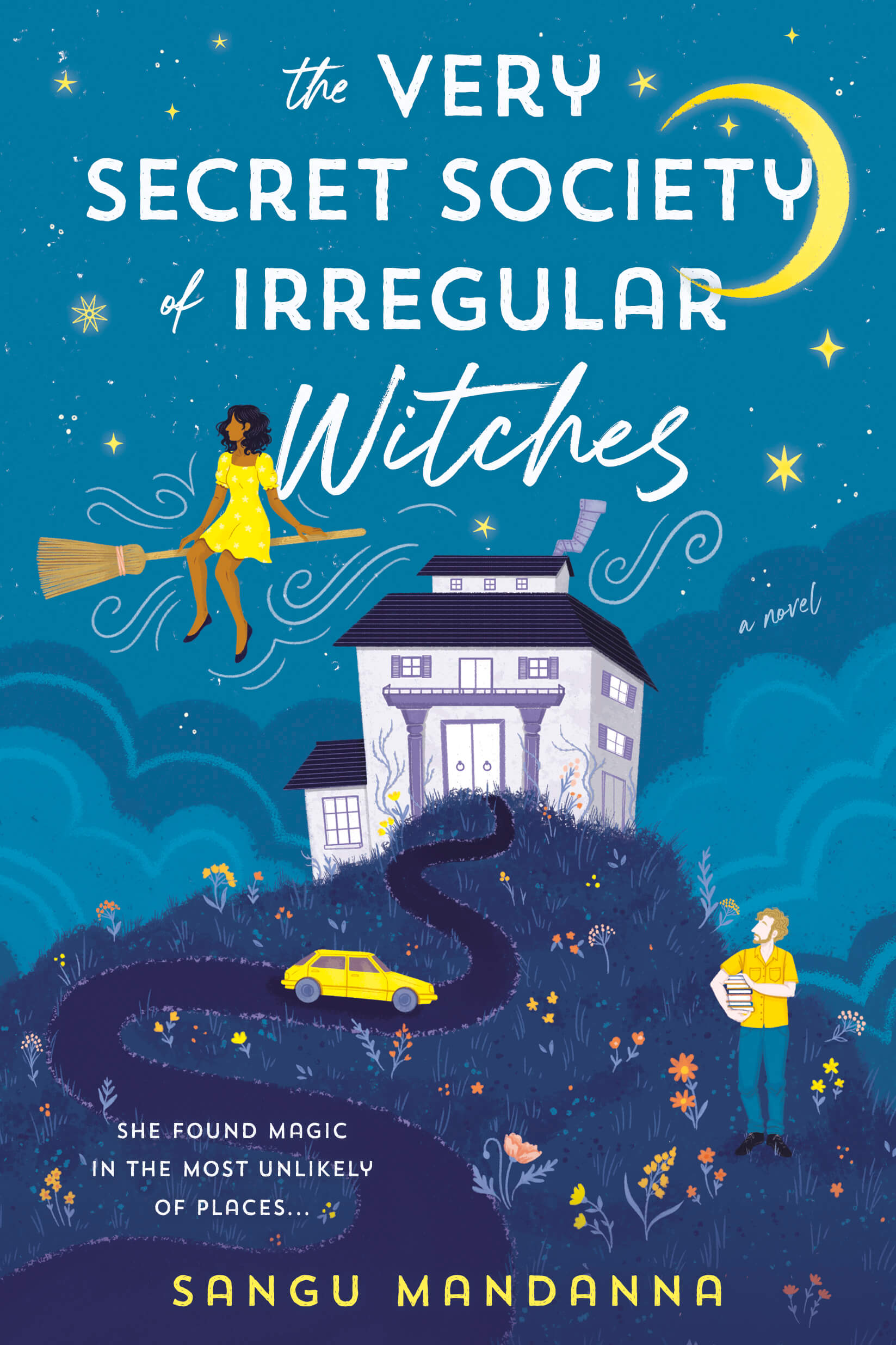
I do love a vampire book that takes place in New Orleans. I know Ann Rice is the gold standard but I would add this to the list of should read. Celine arrives in New Orleans after leaving Paris with a big secret. She is immediately drawn into the world the Cours De Lions and Bastien Sainte Germain. There is a bit of enemies to lovers as their first interaction is definitely antagonistic. However the attraction is there from the very beginning. Not that long after she arrives, a series of murders start to occur. First one near the port, a second at the Cours de Lions while Celine is there and a third in the Convent, Celine is staying in. All pointing to the intended victim is Celine herself but is she? The POV chapters of Celine and Bastien are interrupted by the murderer themselves as we get an insight as to why they are doing what they are doing but more a picture of the history. I must admit, I was a off on who the murder was. In retrospect, I should have been a little bit more suspicious at how often a certain off book character was mentioned but it was still a nice surprise. I do love Celine and Bastien’s relationship and the back and forth between them. I also like the friendship between Celine and Poppy and Odette. I do hope that we get more interactions in the next book. I am also pretty excited about the potential love triangle brewing between, Celine, Bastien and Michael. Michael, is the detective looking into the murders and of course has a history with Bastien. The ending definitely sets up a change in dynamics between all three of them. I look forward to reading how that will all turn out.
What I’m Reading Now: The Blood Phoenix by Amber Chen

The sequel to Of Jade and Dragon that I read last month. I didn’t realize that it had already come out and became available a lot sooner from my library then I was expecting. I decided to read the book instead of listening to the audiobook like I did the last one and see how that changes my feelings on the series.
Review: Oathbound by Tracy Deonn
I am so mad at this book. I thought this series was a trilogy, and now I have to wait for who knows how long for the next book after that ending. AAHHH! All of that aside. This series keeps getting better. It starts right after Bloodmarked ended. Bree, after being betrayed by the Legendborn Order, is ready to burn it all to the ground. She teams up with the Shadow King to train to fulfill her potential. She leaves behind Nick, Will, and Sel, and disappears, and they spend most of the story trying to find her. What I found most interesting is the book’s format. It starts with a prologue that is like 3 or 4 chapters long that goes into what Bree is willing to do to get the most of her power. Then it goes back to the beginning with the POV of William, Mariah, and Sel’s mother. It gives us a chance to learn more about the aftermath of what Bree did, and with her missing, how powerful she is, but also what a threat she is. Then it goes into a mixed POV of Bree, William, Mariah, and Sel as they all start to put the pieces together. Then, a section of Bree, Nick, and Mariah reunited at a Demon ball. That was a fun section, and finally, the finale of everyone reunited and a clear picture of who the Order is and what they are willing to do to keep their power. A big part of the story is an effort to take away obstacles from Bree’s training. The King casts a spell on Bree that makes her forget all of her friends and family. It’s sad, but I did set up one of my favorite troops of fake a relationship, but with a twist, because it’s Bree and Nick who are/were in a relationship, but Bree doesn’t remember. I enjoyed that part. I don’t want to give any more away, but I genuinely love this series and I look forward to the next book.
What I’m Reading Now: The Beautiful by Renee Ahdieh
Review: Of Jade and Dragons by Amber Chen
I liked this book, but there was something missing to make me love it. It had all the elements that I like. The morally ambiguous heroine, a school or trial setting, and dual identities. Ying is a clever girl from a small clan in the Nine Isles. She is a bit of a rebel as she is more interested in building things than traditional roles. Her world is turned upside down when she witnesses her father being murdered. This leads her to the path of the Engineer’s Guild in the capital. She knew her father was once a member before moving back home, but she knows very little else about him. On her way to the Capital, she meets, Ye-Yang, a prince in the high command. She has to disguise herself as one of her brothers because women are not allowed to join the Engineers’ Guild, even though they are capable of doing it. She is sure that the answers as to who murdered her father are there and is determined to do what is necessary to find justice. As always the case, there are a lot of twists and turns, and she finds it hard to know who to trust. She, of course, starts to fall in love with Ye-Yang despite the obvious red flags. Always a complication to everything. In the end, Ying will discover how far she is willing to go to avenge her father and the cost along the way. There is nothing wrong with the book itself. Maybe a little too many times, reminding us of the stakes and at times a bit over description, but that is par for the course with novels like this. I got the audiobook from my library because it was available right away, and maybe that had something to do it with it. The narrator’s voice was very breathy and at times didn’t match the scenes she was reading. I don’t know. It was a good book. I still plan on reading the sequel. Maybe I’ll check out the physical book if I can and see if that makes a difference.
What I’m Reading Now: Oathbound by Tracy Deonn
Assigned Reading: Frankenstein by Mary Shelley and The Importance of Being Earnest by Oscar Wilde
Very occasionally, the interests of my work life and this blog align. This past year, it feels like that has happened more than any other time in career. I’ve been teaching some new-to-me courses in a different department than my home department, teaching some required general education Humanities courses. This has been delightful. I’ve gotten to interact with many students I would have never had the chance to interact with. And I’ve gotten to read (re-read) some classics, some foundational texts, and some big-named thinkers. The Humanities are important because we are important, to ourselves and to each other. These courses I have been teaching allow students to practice important skills around critical thinking and effective communication, but they also give them space to really consider big concepts that loom in the background of our days and define them for themselves. It seems silly to ask, in part because it is so ubiquitous, but what actually is ‘modernity’? Or, ‘progress’? How about ‘what does it mean to be American?’ But the answers to these questions can have very real world consequences. Definitions of modernity can classify useful and important things as out-dated and old-fashioned. For example, do students need writing skills or do they just need to know how to use AI templates? Definitions of progress can have huge impacts on what we require of students, what we expect from companies, what our government’s policy goals are. When we decide what counts as progress, we decide what our priorities are. For example, is generative AI progress? And for the impacts of what it means to be American, you can look at the headlines. The courts are debating who actually falls under birthright citizenship right now.

Two times this Spring, I had the opportunity to revisit classic works in the course of my teaching.The first is Frankenstein by Mary Shelley. I dug this out of the back of my bookshelves from when I was an undergraduate. This classic novel is a seminal work in sci-fi and horror and tells the story of Dr. Frankenstein, a man who never once stops to ask himself if he should, just because he can. I have discovered teaching this book (and from interactions that I’ve had with people on fable), that if your only reference to Frankenstein is pop culture, that you might be expecting this to be centered around the monster. And, it is, except the monster isn’t the creature. Dr. Frankenstein does this massively unethical breakthrough science and then fails, repeatedly, to take responsibility for the consequences of his work. Even though this was first published in 1818, it still feels very relevant to me. A perennial topic for opinion pieces (and for my student’s writing this past year) has been the cultural divide we are seeing and the idea that many of us are living in an echo chamber or are siloed off from ‘the rest of the world’. Dr. Frankenstein lives in this bubble where he thinks about his ideas and how to apply them and then doesn’t step back to seriously consider the implications of those applications. This is a theme that my students have been picking up on and that really resonates with them. It’s like voting for a politician because you like one idea that politician discusses without considering what that would actually mean for their own lives.

The second overlap was The Importance of Being Earnest by Oscar Wilde. I listened to the L.A. Theatre Works production that I got from my local library.This is such a fun play as Wilde pokes fun at Victorian sensibilities and their obsession with appearance by punning off the word “Earnest”. In the play, two men discover that they are both playing similar games. They have a secret alter ego that they are always in need of rescuing that allows them to escape from the seriousness of their lives. This backfires a bit they fall in love with women who are both smitten with ‘Earnest’, one of the secret alter egos. This play is so silly and so fun, but it also something that my students have really enjoyed digging into. As largely members of Gen Z, they have grown up with the internet and very aware of what its like to live in a time that is utterly obsessed with appearance. For them, it might be how they express themselves on social media, but they still are able to draw parallels with the Wilde text.
It is a delight to be able to discuss reading with people who don’t always identify as readers themselves. Beth and I are obviously into reading for fun, but not everyone is, so their perspectives on classics are informed by other things beyond the written word. And it is always interesting to hear what people have to say about the connections they make between classics and their lives. It is also so important to connect with people and to think about big ideas. When we get caught up in the details of our lives (bills, health, jobs, family, etc.), we don’t always leave ourselves time to think about things and enjoy ourselves. But we should, because our humanity is important.
Quick Review: Three of the Dark Iceland novels by Ragnar Jónasson
While there are six novels in this series, there were only three available as audiobooks from my local library, so this is going to be a quick review of the three that I have read. I’ve read 1,2, and 5, so while I’ll eventually get to the others, and that was definitely notable. So, spoilers ahead.

Snowblind follows the story of Ari Þór Arason. He is a newly minted police officer, fresh out of the academy, who takes a job in the town of Siglufjorour near the Arctic circle. Siglufjorour is the kind of place that has cruise ships of tourists stopping in the summer and is potentially cut off from other places because of snow in the winter. In his first big case in town, a young woman is found unconscious and bleeding in snow and then a writer, who is a national treasure, is found dead. Ari Þór starts uncovering local secrets in a place where no one locks their doors. He has to decide who he can trust and who he should believe, while also juggling upheaval in his personal life as his girlfriend, back in Reykjavík, isn’t thrilled by his move North. This was an interesting tale and I liked a lot of the side characters, but I wasn’t sold on Ari Þór as a character.

Blackout is set in the summer when one can expect 24 hours of light in the Northern town of Siglufjorour. However, a volcanic eruption’s ash cloud turns that bright summer days into twilight. A man is found beaten to death near a fjord and Ari Þór and the other member’s of the police force are set out to investigate. A young journalist relocates North from Reykjavík in order to investigate as well. This is a dark and twisty kind of story where pieces of the past are uncovered while our main characters are dealing with both personal horror and the ongoing horror of the murder. I liked the introduction of the reporter and her perspective, although I’m still kind of meh on Ari Þór.

Okay, so this one took a huge leap into the future because I didn’t realize at the time it was book 5 in the series. Oof. But this might be my favorite of the bunch. One of Ari Þór’s colleagues is murdered. The setting of the murder raises questions, the local politics of it all raises questions, Ari Þór’s uneasy relationship with the locals is a bit of a sticky point. There are lots of elements of human tragedy in this novel, and it kept me hooked and also really pulled on my heart strings.
Overall, I would say that this is an enjoyable series, but if I had to recommend just one of the Jónasson’s series, I would recommend the Hidden Iceland series. There is something about Ari Þór that just kind of rubs me the wrong way. I was a bit annoyed by the number of his problems that were entirely of his own making. But, the main character in Hidden Iceland is a middle aged woman, who it might just be that I have more in common with her than I have with a brand new police dude. So, if you a brand new police officer patrolling the fjords and snow-covered roads of Northern Iceland sounds interesting to you, or if you just like murder in a small town tales, then these are for you.