Bring on the dragons
Bring on the dragons
I don’t remember where I heard about this book, but I thought, “Oh, that sounds interesting.” So, I put myself on the waiting list for both the physical copy and the audiobook at the library. The audiobook came available first and I checked it out but I couldn’t make myself start it. It was something that I wanted to read and yet I was having trouble even beginning to read it. There was just something about the subject matter that made me think, “Oh, this is going to be a hard read. I don’t know if I feel like reading something hard right now…” And, I kept coming up with excuses until I had to return the audiobook unread.
Well, when the physical copy became available, I went and got it. The memoir is only 145 pages, so it is a little whisp of a book. That made it seem a little less daunting. (Although the audiobook is only four hours so, I don’t know what my deal was.) And it wasn’t hard to read. The prose was thoughtful and I was pulled into the story. Ciment’s memoir is about her relationship with artist Arnold Mesches and is part a revisiting of a previous memoir Half a Life and in part just a new memoir about a marriage seen from a new perspective. The story starts at the beginning of the relationship when she first started taking art classes from Arnold as a sixteen-year-old and follows through his divorce from his first wife, their marriage, and their life together up to his death at the age of ninety-three.
I think I was expecting something more negative and maybe not so much critical, there is nuance here. And a lot of questions are posed that the text really doesn’t answer. What we see is a relationship, the give and take and the joys and sorrows, just like you would have in any relationship. But there was also an investigation of power and understanding. Ciment tells us about being a teenager or someone in her early twenties and feeling powerful. She talks about when she felt jealous. She talks about when she felt supported or when she had to be supporting. As someone looking at a relationship that is now over, she has the 40,000-foot view, but also the memories of what it was like being inside it. She discusses how things that are obvious in hindsight, like how it feels cliche to think that she was, as a sixteen-year-old looking for a father figure, whom she found in someone her father’s age, but how clicheness of it part of the truth that we shouldn’t look away from just because it feels obvious. Ciment discusses what it is like being the younger woman, even as they age, and what that meant for her, watching her partner fall apart when she is still very much in her prime. I don’t know, I think I was expecting this to be more condemning of the relationship, but it wasn’t and I’m glad it wasn’t. Even though there was a power imbalance and even if, at seventeen, she hadn’t been considering what it would mean to be married to someone so much older than her, she still had agency and she exercised it. Following his divorce from his first wife, her husband had an artistic revival, something that may never have happened to him otherwise. And she went from painting to conceptual art to writing, a path she might not have otherwise taken without his support. This was thoughtful and interesting. And it left me with more questions than answers. I’m writing this review hours after I finished reading the book (so I could reference it before I have to return it to the library), but I have a feeling this is a memoir I am going to consider for quite a while.
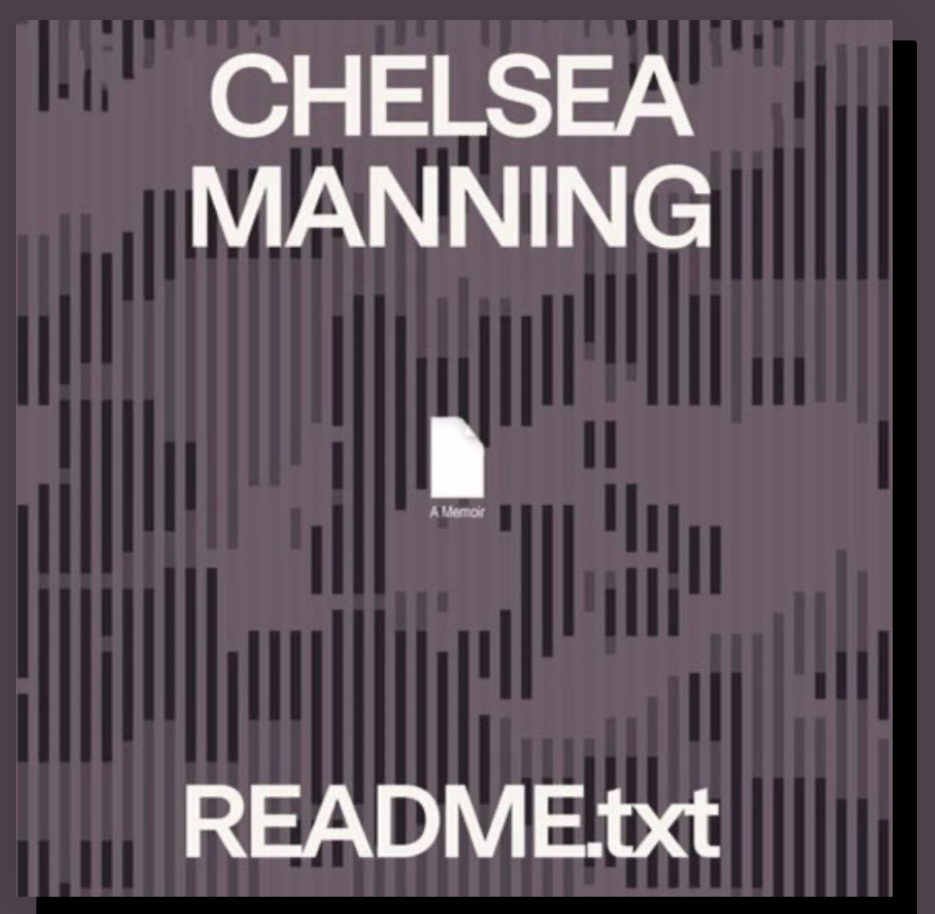
So, here are things that I knew about Chelsea Manning before reading this book:
But, I knew there was more to the story than those things so when her memoir came up in my recommendations, I thought it would be a good idea to check it out. Manning narrates the audiobook, and hearing her story in her own voice made it feel very personal. She discusses growing up in Oklahoma, realizing she was trans, and the problems that caused for her at school and at home (although she didn’t come out as trans for a long time.) She talks about being interested in computers and finding a community. She talks about coming out. She talks about being homeless. She talks about struggling with being trans and how the army, with its enforced masculinity, was part of an effort to change something about herself. She also discusses at length her ideals, what brought her to join the military, and what eventually brought her to share classified documents with Wikileaks. The memoir then discusses her time in prison and the military trial that initially gave her a 35-year prison sentence. This was later commuted by President Obama before he left office in 2017.
I liked how Manning’s humanity is always front and center in this memoir. I mean, as a memoir, how else would it be? But still, as someone who doesn’t have a lot of interaction with military personnel, this reminder that they are individuals with their own problems, concerns, and ideas. I also learned a little bit about how intelligence gathering works, which was at times interesting and appalling. Thinking about what kind of information the government can and does track about people, for various reasons is something that I’m going to be considering for a long while.
I think transparency and a knowledgeable public are important for our democracy, and looking around the world today, with the US in the middle of a Presidential election and ongoing conflicts in Palestine and Ukraine (And Sudan and Congo and many other places where my attention hasn’t already been drawn), thinking about what America’s role is on the world stage and how information and the public back home is managed is important. I am glad that I read this, even if it was at times a very difficult read. Her time in prison and the descriptions of solitary confinement were brutal.
So, if you are interested in contemporary American history and would like to hear about it from someone who was involved, this is worth the read. But, go into it knowing that there are descriptions of solitary confinement, homelessness, war crimes, and mentions of suicide.


Another excellent selection from my public library. This is a re-read for me. I listened to the audio, which I remember being spectacular when it first came out. Then I remembered the movie coming out and hearing disappointing reviews, so I skipped it. The book is written as an oral history about a dozen years after global victory in the great zombie war. All kinds of people are interviewed and they share their stories about the early days and their first encounters, the trajectory of the outbreak, various wilderness situations, management, government, victory, surrender. It’s a really fun piece of zombie fiction.
I picked it up again recently because I ended up watching the film recently. I know it’s a cliche that the book is always better than the movie, but here it’s true. The movie uses some of the book as background for just your bog-standard dude-works-hard-and-finds-the-key-to-save-the-day story. He’s a real hero. Boring. The book, on the other hand, is full of regular people sorting themselves, their families, and their communities out. It’s young adults telling you about their lost childhoods, people who made tough choices and maybe saved some of humanity trying to make sense of it all. It’s people running government agencies that never needed to exist before now. It’s billionaires being monsters. The book really is something; an interesting twist on the zombie apocalypse. The text is a little dated, but reading it post pandemic makes it eerily real in some ways. There’s panic, misinformation, deniers, true believers… it all feels a little familiar. This isn’t my first zombie fiction in an endemic Covid world, so I had some expectation of what would be the most upsetting about it. I thought, perhaps, it would be loads of people getting sick but, no, it turns out watching people disregard and endanger others is what did it for me. Because this is written after the main events being described, you don’t get the immediacy of having to watch a character die because someone else made a terrible choice.
So, if you like oral histories, zombies, and knowing that there’s some kind of happy ending, this is for you.

This was such a great trilogy. I am curious to see how it turns into a movie or TV series. I know the rights have been sold and Tomi is involved in the script. Zelie has been through so much and honestly wouldn’t have faulted her for giving up but of course she didn’t. Nor did her brother and friends. At the end of the last book, the Maji were successful in overthrowing the king but then overtaken by the Skulls from across the sea. King Baldyr has been hunting Maji’s because he needs the one to help him achieve Godhood. We all know this is Zelie. She escapes but not before he implants in her gold medallion that changes her powers. She has a vision that she must find the other magical person Baldyr needs. Another woman from a mysterious nation, New Gaia. Mae’e is a great addition to the books. I liked her stoicism and fire. I know that might not make sense but it’s true. It was nice to see an expansion of the world but we did sacrifice what was going on in Orisha since most of the action was happening elsewhere. The other criticism I have that the ending wasn’t as satisfying as I wanted it to be. I feel the epilogue could have given a little bit more. Other then that I found it to be a fun adventure like the other books. Baldyr is a much scarier villain then the previous king was. The stakes were much higher because the threat wasn’t just to the Maji or Orisha but to New Gaia as well. This was a good series and I am looking forward to what Tomi does next.
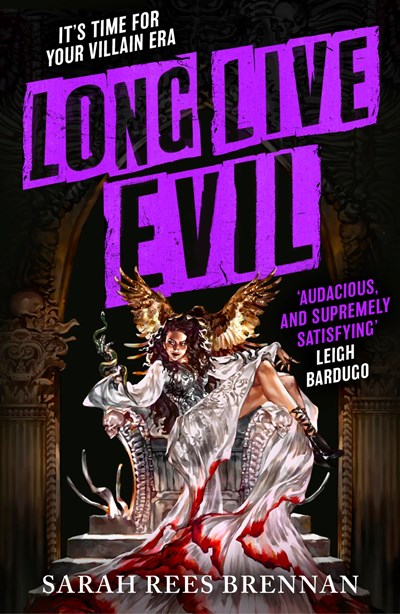
The Unspoken Trilogy is one of my favorite series so I am pretty stocked to see what Sarah Rees Brennan will do with her first adult novel.

The Damned is the second book in The Beautiful series and it continues some weeks after the end of the first book, so spoilers for The Beautiful ahead.
Celine finds herself in the hospital, Michael Grimaldi by her side, unable to remember how she came to be in the hospital. All anyone would tell her is that there had been a murderer stalking the streets of New Orleans and he would have taken her life if Michael hadn’t saved her. But, all her memories of the incident and some from the time before are just gone. Her doctor says that it isn’t uncommon for people with head injuries to forget things, and her memory may return in some time. Of course, we know where her memories have gone and have no expectation that she will ever get them back.
Bastien wakes above the restaurant Jacques’, surrounded by the other members of the Court of Lions, a vampire. And he is angry about it. He is made even angrier to find out that Celine has traded her memories and possible future with him to save him. Bastien hears of someone who may be able to unmake him and he becomes obsessed with the possibility of not being a vampire again.
Émilie, still consumed by rage, waits for any sign that she has succeeded in killing her brother and ending Nicodemus’s bloodline. Obviously, that would be delightful, but there is a possibility, she knows, that Nicodemus would have turned his nephew. And if he did, that is also to her advantage because she can use it to stoke the war between the Fallen and the Brotherhood.
So, we have Celine, trying to recall everything she has lost, Bastien struggling to come to grips with his new life, Michael Grimaldi, still in love with Celine and fawning over her in Bastien’s absence, a scheming werewolf still on the prowl, and to that we add newly engaged Pippa, and a whole bunch of scheming fey, just waiting to cause chaos. And chaos there is. This was also a quick read, even at 401 pages. Can Bastien come to accept himself? Can Celine recall her lost past? What other secrets will be exposed? This book was a good time. We learn more about the fey Otherworld in this book and we continue to watch our main characters grow and change. We learn more about the other members of the court, getting some more backstory on Madeleine, Hortense, Jae, Odette, and Arjun.
The end was a bit abrupt, but there are two more books left in the series so I don’t mind a cliffhanger (especially since those books are already out). We do get some resolution, with some storylines tying up so that we can move on. This was a fun read, so I am definitely going to pick up the next one.
I got this one from my local library and that is where I’ll be going for the next one!
 2 Women, So Many Books