I like Sarah Vowell but this was an impulse purchase during one of audible‘s sales. I’m learning a lot about Hawaii. It is pretty interesting.
I like Sarah Vowell but this was an impulse purchase during one of audible‘s sales. I’m learning a lot about Hawaii. It is pretty interesting.

Timbaland has worked with some of my favorite artists and had a hand in some of my favorite songs. Aaliyah’s Try Again is often stuck in my head. So, I figured that I don’t often read memoirs, so I could use it as a Diverse stacks, Diverse Lives Challenge entry.
I like Timbaland’s music but until I read this I didn’t know hardly anything about the man. This book starts with a Fischer Price record player and goes all the way to his involvement with the television show Empire. I learned a lot about the ’90s and early 2000’s music scene. I got to hear a little bit about the process of making a hit song. This book was inspiring and uplifting. Timbaland talks about his process. He talks about focus. He tells you about all of his successes and some of his failures. He points out that you have to pay your dues but that you don’t have to let yourself be used (important to remember when people offer you something and want to pay you in “exposure”).
I really liked this book. I listened to the audiobook (which I got from audible). Timbaland didn’t read the book himself but William Harper who does narrate it did a great job.
So, if you’re interested in music, music production, the ’90s and early ’00s or Timbaland, I recommend that you check it out.
This counts as my Book from a genre you’ve never read (or that I can’t remember the last time I read).
Oh, and because I think everyone should have it suck in their head, here is the video for Try Again:
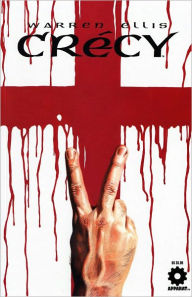
I’m pretty sure that I read this graphic novel when it first came out but, I recently moved and in all the packing I came across it and decided it was time to pick it up and read it again.
The year is 1346 and then English army is outnumbered outside of the village of Crecy. They’ve run a shock-and-awe campaign, attacking villages and just generally making mayhem but now they have to stand and fight. French forces with mounted knights and hired crossbowmen go up against English longbows and other fighters a battle that would have a major impact on the Hundred Years war. The story is centered around one longbowman as he moves through the French countryside and prepares for battle.
This is a quick read about a piece of English history. It is pretty good. A little sweary and sometimes a little gross, but that is in line with the subject material. So, if you’re looking for a little history but you aren’t into reading a long tome, I say give this a try.

Maybe it will help me be a better writer! It probably won’t but it might!

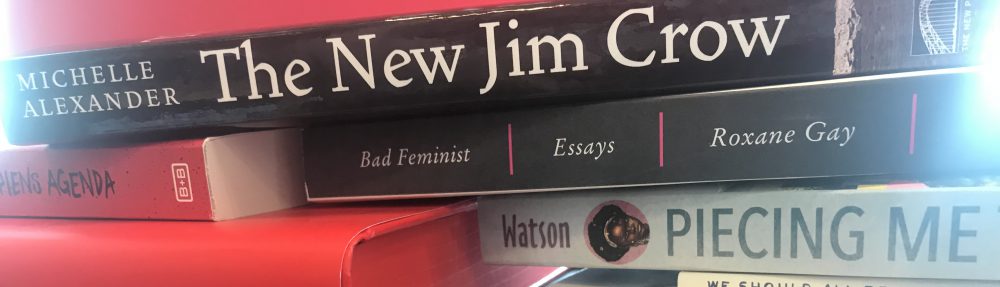
When I posted my “What I’m Listening to” for this book I said that, just in the first chapters, I kept getting a lot of Tupac lyrics stuck in my head. In particular the line, “Instead of a war on poverty, they got a war on drugs so police can bother me.” This book made me in turns fucking furious, and heartbroken and uncomfortable, and increasingly aware that the U.S. is doing a big thing badly and that big thing is incarcerating citizens.
In this book, Michelle Alexander examines America’s prison systems and makes the argument that mass incarceration is a system of racial control that has taken the place of Jim Crow. And, her argument is pretty convincing. She looks at how, not all at once, but little by little changes have been made that have largely affected poor people and people of color. She looks at changes in the welfare system, changes in policing, the militarization of policing, and changes in drug policy.
Last year, I heard Piper Kerman speak at a local library function and this revisited some of the things that she touched on in her talk (and that at friend of mine touched on in a chat after the talk). We send a lot of people to prison. We send people to prison for murder. We send people to prison for rape (although, not often and not for very long but that’s a topic of discussion for another day). And, we send lots and lots of people to prison for non-violent drug offenses. How are we serving these people by putting them away for non-violent crime? How are we serving their communities by taking them out of the community? How are we serving them and their communities by disenfranchising them after they have served their time? How are we serving them and their communities by making access to welfare and public housing impossible after being convicted of a felony? I get it, if people do “bad” things, you don’t want to feel like you’re rewarding them. But, if you have nothing because you’ve just spent many years in prison and you want to do right and get back into the world, how can you do that with so many avenues closed off to you?
I don’t know.
This book raised way more questions than it answered for me but I am glad that I read it even if it means I now have to spend time thinking about these issues and how I can help set them right.

This is how I’ve been spending my lunch breaks. I’m such a nerd.
Everyone, I have a confession to make. I don’t think I like Margaret Atwood’s writing. (Although, I’ve been told I’ve only read the meh ones). I’ve read Oryx and Crake and The Penelopiad and now the(I think I may have also read The Handmaid’s Tale in high school but I don’t remember how it ends so I’m not counting it.) And, I’ve not been super enthused about any of them.

The Blind Assassin seems to be going for a certain kind of style and I think it succeeds. So, I can recognize that it is technically a good piece of writing. But, the main narrative which was focused on the lives of two sisters, did not keep my interest at all. The story is told by Iris, an old woman recounting her life in letters. She tells the story of her childhood as the daughter of button magnate in Ontario. World War I happens. The business booms. the depression happens. The business fails. She and her sister fall in love with a communist or anarchist or writer or artist. Iris marries another manufacturing giant to help the family stay afloat. Her sister Laura publishes a book called The Blind Assassin that becomes a huge scandal and therefore a huge hit.
The sub-plot (sub-story?) about the Blind Assassin was awesome. I wanted to read the Blind Assassin. More of that, please. But, the main narrative itself…well, I could see where it was going and I wasn’t interested enough to be excited that as the plot revealed itself and I was right in my guesses.
So, there you have it. I feel like I should have loved this. And, I didn’t. It wasn’t terrible. But, it also wasn’t life-changing. I don’t recommend it but I also don’t not recommend it.


 2 Women, So Many Books